
Why a water conditioner might be better than a softener for your Cedarburg home
Cedarburg’s hard water creates scale buildup that damages appliances and plumbing systems. Traditional salt-based softeners work by exchanging calcium and magnesium ions for sodium, but they require constant maintenance, create wastewater, and add sodium to your drinking water. Water conditioners use Template Assisted Crystallization to neutralize hardness minerals without salt or chemicals, making them an increasingly popular alternative for Cedarburg homeowners dealing with hard water from Lake Michigan and local well sources. The best options for water heater replacement in Wauwatosa.
Milwaukee’s water hardness averages 7-9 grains per gallon, but Cedarburg’s well water systems often measure 15-25 GPG. This extreme hardness causes scale buildup in water heaters, dishwashers, and pipes, reducing efficiency and shortening appliance lifespans. Water conditioners prevent scale formation without the ongoing costs and environmental concerns of traditional softeners. Milwaukee Metropolitan Sewerage District.
How traditional water softeners work in Cedarburg homes
Traditional softeners use ion exchange resin beads that swap sodium ions for calcium and magnesium ions. When hard water passes through the resin bed, the beads release sodium and capture hardness minerals. The system regenerates every few days by flushing with brine solution, sending concentrated salt water down the drain. Professional drain cleaning in Shorewood for stubborn kitchen clogs.
In Cedarburg, this regeneration process creates several problems. The MMSD Deep Tunnel system handles wastewater for the region, but salt discharge contributes to chloride levels that affect local waterways. Cedarburg homes with septic systems face additional challenges as salt can disrupt beneficial bacteria in drain fields.
Annual salt consumption for a family of four typically ranges from 300-600 pounds, costing $100-200 per year plus delivery fees. The regeneration process wastes 50-100 gallons of water each cycle, increasing water bills and putting strain on local water resources during drought conditions.
What makes water conditioners different for Cedarburg’s water quality
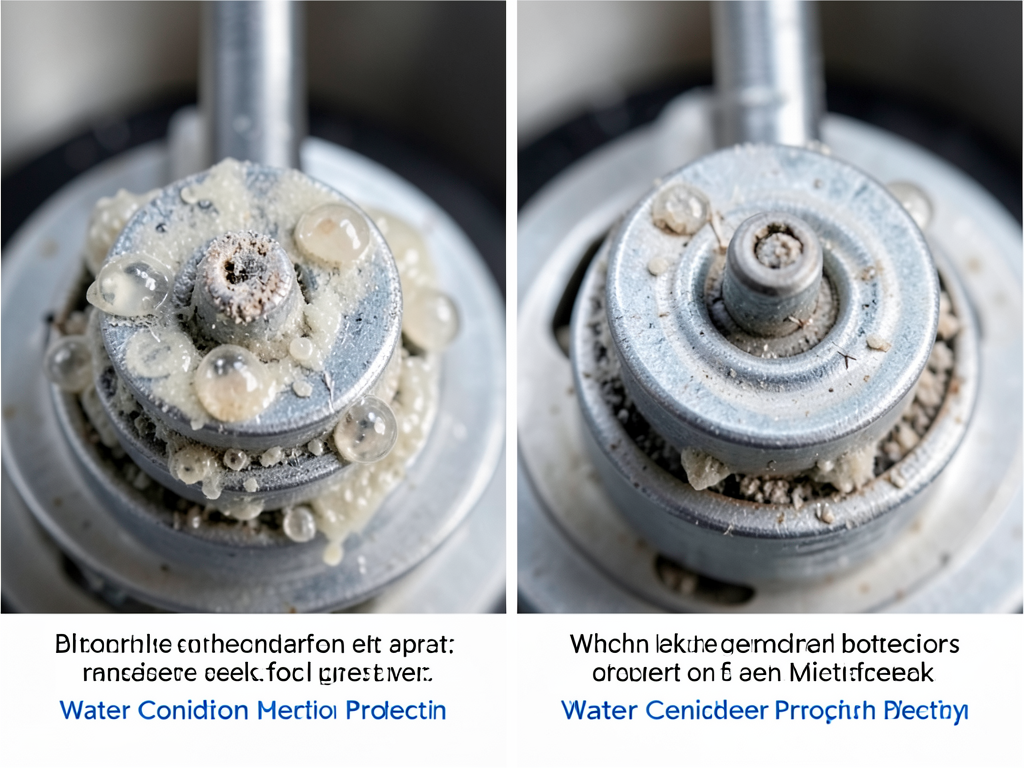
Water conditioners use Template Assisted Crystallization technology to neutralize hardness minerals without removing them. Special media in the conditioner transforms dissolved calcium and magnesium into microscopic crystals that cannot attach to surfaces. These inactive crystals flow through pipes and appliances without causing scale. What to do if your pipes freeze during a Milwaukee cold snap.
For Cedarburg’s high-hardness water, TAC systems achieve 95-99% scale prevention effectiveness. The media lasts 3-5 years before replacement, eliminating the need for salt, electricity, or wastewater discharge. Water maintains its natural mineral content while preventing the damage caused by scale buildup.. Read more about Things to consider before installing a luxury steam shower in your Whitefish Bay home.
The Milwaukee Water Works reports that Lake Michigan water contains approximately 150-200 parts per million of dissolved minerals. Cedarburg’s well water sources often double these levels, making effective scale prevention critical for protecting plumbing investments in older homes with original copper or galvanized piping. Reliable Milwaukee sump pump repair services to keep your basement dry.
Maintenance requirements: Softener vs. Conditioner for Cedarburg residents
Traditional softeners demand monthly attention from Cedarburg homeowners. Salt levels must be checked weekly, with 40-80 pound bags added every 4-6 weeks. The brine tank requires annual cleaning to prevent salt bridging and sludge buildup. Resin beds need replacement every 7-10 years at $200-400 cost.
Water conditioners eliminate these hassles. No salt purchases, no electricity consumption, no regeneration cycles to monitor. The only maintenance involves replacing the TAC media every 3-5 years, a simple process that takes less than an hour. No wastewater discharge means no impact on septic systems or municipal treatment facilities.
Cedarburg’s seasonal temperature swings from -10°F to 95°F create additional challenges for softeners. Freezing can damage brine tanks and control valves, while summer humidity promotes bacterial growth in salt storage areas. Conditioners avoid these climate-related failures with their sealed, maintenance-free design.
Cost comparison for Cedarburg homeowners over five years
| Cost Factor | Traditional Softener | Water Conditioner |
|---|---|---|
| Initial Equipment | $1,200-2,000 | $1,500-2,500 |
| Annual Salt Costs | $150-250 | $0 |
| Water Waste (5 yrs) | 12,500-25,000 gallons | 0 gallons |
| Maintenance Labor | $200-400 | $100-200 |
| 5-Year Total | $2,250-3,200 | $1,600-2,700 |
The upfront cost difference narrows when considering long-term expenses. Cedarburg’s high water hardness means traditional softeners work harder and consume more resources. Conditioners provide comparable scale protection while reducing operational costs and environmental impact.
Environmental impact and Cedarburg’s water conservation goals
Cedarburg’s location near Lake Michigan creates unique environmental considerations. The MMSD Deep Tunnel system processes wastewater for the entire region, and chloride levels from softener discharge affect aquatic ecosystems. Water conditioners eliminate this salt contribution while maintaining effective scale prevention.
The Wisconsin Department of Natural Resources monitors chloride levels in surface waters, with many streams exceeding recommended thresholds due to road salt and water softener discharge. Cedarburg residents switching to conditioners help reduce this environmental burden while protecting their plumbing investments. Wisconsin Department of Natural Resources.
Water conservation becomes critical during summer months when Lake Michigan levels fluctuate. Traditional softeners waste 1,500-3,000 gallons annually through regeneration cycles. Conditioners eliminate this waste, aligning with Cedarburg’s sustainability goals and reducing strain on municipal water supplies.
Impact on Cedarburg’s historic homes and plumbing systems
Cedarburg’s historic district contains homes built from the 1850s through 1930s, many with original plumbing systems. These properties often feature galvanized steel pipes, cast iron drain lines, and copper supply lines that are vulnerable to scale buildup and corrosion from hard water.
Traditional softeners can actually accelerate corrosion in older homes. The sodium exchange process creates electrolytic conditions that damage galvanized pipes from the inside out. Water conditioners avoid this problem by neutralizing minerals without creating corrosive byproducts.
Historic preservation guidelines in Cedarburg discourage modifications that could damage original systems. Water conditioners install as simple in-line units without requiring drain connections or electrical outlets, making them ideal for maintaining the integrity of historic properties while providing modern water quality benefits.
Health considerations for Cedarburg families
Traditional softeners add 7-30 milligrams of sodium per quart of water, depending on hardness levels. For Cedarburg’s high-hardness water, this sodium addition can represent 10-15% of the recommended daily sodium intake for adults on restricted diets.
Water conditioners preserve the natural mineral content of Cedarburg’s water while preventing scale formation. The calcium and magnesium that cause hardness also provide dietary benefits. Some residents report preferring the taste of conditioned water compared to the slightly salty taste of softened water.
Medical professionals in the Milwaukee area note that water quality affects more than just plumbing. Skin irritation, soap scum, and laundry issues often improve with proper scale prevention, regardless of whether the system uses salt or TAC technology.
Installation considerations for Cedarburg properties
Water conditioner installation requires minimal space and no drain connection. The unit installs on the main water line after the pressure tank but before any water heaters or treatment equipment. Most Cedarburg installations complete in 2-3 hours with basic plumbing connections.
Traditional softeners need 10-15 square feet of floor space, a nearby electrical outlet, and a drain connection for regeneration wastewater. Many Cedarburg basements have limited space near the main water entry point, making conditioner installation more practical for older homes. Who to call when your Bay View basement floods at 3 AM.
Wisconsin DSPS plumbing code requires proper backflow prevention when installing any water treatment equipment. Both systems need similar permits and inspections, but conditioners avoid the additional requirements for wastewater discharge systems that softeners must meet.
Performance comparison in Cedarburg’s climate conditions
| Performance Factor | Traditional Softener | Water Conditioner |
|---|---|---|
| Scale Prevention | 95-99% | 95-99% |
| Freeze Protection | Requires freeze protection | Freeze-resistant design |
| Power Requirements | Electricity needed | No power required |
| Water Pressure Impact | 5-10 psi drop | 2-3 psi drop |
| Lifespan in Cedarburg | 10-15 years | 15-20 years |
Making the right choice for your Cedarburg home
Water conditioners offer compelling advantages for Cedarburg homeowners dealing with hard water from Lake Michigan and local well sources. The technology provides effective scale prevention without the maintenance burden, environmental impact, or sodium addition of traditional softeners.
Consider your specific situation when choosing between systems. If you have a septic system, prefer low maintenance, want to avoid salt costs, or need to preserve the integrity of historic plumbing, a water conditioner likely makes more sense. If you prefer the slippery feel of truly soft water or have extremely high hardness levels above 25 GPG, a traditional softener might still be appropriate.. Read more about The truth about PFAS and choosing the right water filter for your Menomonee Falls family.
Cedarburg’s unique combination of high water hardness, historic architecture, and environmental consciousness makes water conditioners an increasingly popular choice. The technology continues to improve, with newer systems achieving better performance at lower costs than ever before.
Frequently Asked Questions
Will a water conditioner actually protect my appliances from scale?
Yes. Water conditioners using Template Assisted Crystallization achieve 95-99% scale prevention effectiveness, comparable to traditional softeners. The microscopic crystals formed by the conditioner cannot attach to heating elements, pipes, or appliance surfaces, preventing the damage caused by hard water scale.
How long does water conditioner media last in Cedarburg’s hard water?
In Cedarburg’s high-hardness conditions (15-25 GPG from well water), TAC media typically lasts 3-4 years before replacement is needed. The media doesn’t wear out but eventually becomes saturated with hardness minerals. Replacement involves swapping the media cartridge, a simple process that takes under an hour.
Can I install a water conditioner myself in my Cedarburg home?
While possible, professional installation ensures proper sizing, code compliance, and warranty protection. Wisconsin DSPS requires licensed plumbers to modify main water lines. Professional installation also includes water testing to verify the system is sized correctly for your specific water hardness and household flow rates.
Do water conditioners remove iron or other contaminants common in Cedarburg well water?
No. Water conditioners only address hardness minerals through scale prevention. They do not remove iron, manganese, sulfur, or other well water contaminants common in Cedarburg. If you have these issues, you’ll need additional treatment equipment specifically designed for those contaminants.
How much space does a water conditioner need compared to a softener?
Water conditioners require significantly less space than traditional softeners. While softeners need 10-15 square feet of floor space plus room for salt storage, conditioners install as compact in-line units that take up only 2-3 square feet. This makes them ideal for Cedarburg homes with limited basement space.
Will I notice any difference in how water feels with a conditioner versus a softener?
Yes. Water conditioners don’t create the slippery, soapy feel that softeners produce. Your water will feel more natural while still preventing scale. Soap lathers normally, and you won’t experience the overly slick sensation some people dislike with traditional softened water.

Call (414) 375-7955 today to schedule your free water hardness test and learn which system is right for your Cedarburg home.
Protect your plumbing and appliances from Cedarburg’s hard water damage. Call (414) 375-7955 before scale buildup causes expensive repairs.
{
“@context”: “https://schema.org”,
“@type”: “BlogPosting”,
“headline”: “Why a water conditioner might be better than a softener for your Cedarburg home”,
“description”: “Discover why water conditioners outperform traditional softeners for Cedarburg’s hard water. Learn about maintenance, costs, and local water quality from Milwaukee plumbing experts.”,
“wordCount”: 1763,
“datePublished”: “2026-04-06T07:21:00.000Z”,
“dateModified”: “2026-04-06T07:21:00.000Z”,
“inLanguage”: “en-US”,
“mainEntityOfPage”: {
“@type”: “WebPage”,
“@id”: “https://eliteplumbingmilwaukee.com”
},
“publisher”: {
“@type”: “LocalBusiness”,
“name”: “Elite Plumbing Milwaukee”,
“url”: “https://eliteplumbingmilwaukee.com”
},
“author”: {
“@type”: “Organization”,
“name”: “Elite Plumbing Milwaukee”,
“url”: “https://eliteplumbingmilwaukee.com”
},
“image”: {
“@type”: “ImageObject”,
“url”: “https://eliteplumbingmilwaukee.com/wp-content/uploads/2026/03/why-a-water-conditioner-might-be-better-than-a-sof-1.png”
}
}
{
“@context”: “https://schema.org”,
“@type”: “Plumber”,
“name”: “Elite Plumbing Milwaukee”,
“url”: “https://eliteplumbingmilwaukee.com”,
“address”: {
“@type”: “PostalAddress”,
“addressLocality”: “Milwaukee”
},
“areaServed”: {
“@type”: “City”,
“name”: “Milwaukee”
}
}
{
“@context”: “https://schema.org”,
“@type”: “FAQPage”,
“mainEntity”: [
{
“@type”: “Question”,
“name”: “Will a water conditioner actually protect my appliances from scale?”,
“acceptedAnswer”: {
“@type”: “Answer”,
“text”: “Yes. Water conditioners using Template Assisted Crystallization achieve 95-99% scale prevention effectiveness, comparable to traditional softeners. The microscopic crystals formed by the conditioner cannot attach to heating elements, pipes, or appliance surfaces, preventing the damage caused by hard water scale.”
}
},
{
“@type”: “Question”,
“name”: “How long does water conditioner media last in Cedarburg’s hard water?”,
“acceptedAnswer”: {
“@type”: “Answer”,
“text”: “In Cedarburg’s high-hardness conditions (15-25 GPG from well water), TAC media typically lasts 3-4 years before replacement is needed. The media doesn’t wear out but eventually becomes saturated with hardness minerals. Replacement involves swapping the media cartridge, a simple process that takes under an hour.”
}
},
{
“@type”: “Question”,
“name”: “Can I install a water conditioner myself in my Cedarburg home?”,
“acceptedAnswer”: {
“@type”: “Answer”,
“text”: “While possible, professional installation ensures proper sizing, code compliance, and warranty protection. Wisconsin DSPS requires licensed plumbers to modify main water lines. Professional installation also includes water testing to verify the system is sized correctly for your specific water hardness and household flow rates.”
}
},
{
“@type”: “Question”,
“name”: “Do water conditioners remove iron or other contaminants common in Cedarburg well water?”,
“acceptedAnswer”: {
“@type”: “Answer”,
“text”: “No. Water conditioners only address hardness minerals through scale prevention. They do not remove iron, manganese, sulfur, or other well water contaminants common in Cedarburg. If you have these issues, you’ll need additional treatment equipment specifically designed for those contaminants.”
}
},
{
“@type”: “Question”,
“name”: “How much space does a water conditioner need compared to a softener?”,
“acceptedAnswer”: {
“@type”: “Answer”,
“text”: “Water conditioners require significantly less space than traditional softeners. While softeners need 10-15 square feet of floor space plus room for salt storage, conditioners install as compact in-line units that take up only 2-3 square feet. This makes them ideal for Cedarburg homes with limited basement space.”
}
},
{
“@type”: “Question”,
“name”: “Will I notice any difference in how water feels with a conditioner versus a softener?”,
“acceptedAnswer”: {
“@type”: “Answer”,
“text”: “Yes. Water conditioners don’t create the slippery, soapy feel that softeners produce. Your water will feel more natural while still preventing scale. Soap lathers normally, and you won’t experience the overly slick sensation some people dislike with traditional softened water.”
}
}
]
}
{
“@context”: “https://schema.org”,
“@type”: “BreadcrumbList”,
“itemListElement”: [
{
“@type”: “ListItem”,
“position”: 1,
“name”: “Home”,
“item”: “https://eliteplumbingmilwaukee.com”
},
{
“@type”: “ListItem”,
“position”: 2,
“name”: “Blog”,
“item”: “https://eliteplumbingmilwaukee.com/blog”
},
{
“@type”: “ListItem”,
“position”: 3,
“name”: “Why a water conditioner might be better than a softener for your Cedarburg home”
}
]
}
{
“@context”: “https://schema.org”,
“@type”: “Service”,
“serviceType”: “Plumbing”,
“provider”: {
“@type”: “LocalBusiness”,
“name”: “Elite Plumbing Milwaukee”,
“url”: “https://eliteplumbingmilwaukee.com”
},
“areaServed”: {
“@type”: “City”,
“name”: “Milwaukee”
},
“description”: “Discover why water conditioners outperform traditional softeners for Cedarburg’s hard water. Learn about maintenance, costs, and local water quality from Milwaukee plumbing experts.”
}