




Menu

Trenchless Sewer Repair in Milwaukee | Zero Downtime for Your Business Operations

Commercial-grade trenchless sewer repair using CIPP lining and no-dig technology to restore underground infrastructure without excavating parking lots, disrupting customer access, or halting your Milwaukee business for days.

Slider Image 1
Slider Image 2
Slider Image 3
Slider Image 4
Slider Image 5
Slider Image 7
Slider Image 8
Slider Image 9
Slider Image 10
Slider Image 11

Underground Sewer Failures Cost Milwaukee Businesses Revenue Every Hour

When your commercial sewer line fails beneath a Milwaukee parking lot or under the footprint of your building, traditional excavation shuts down operations for days. You lose customer access. You face permit delays with the City of Milwaukee. You absorb labor costs while your facility sits idle.

Milwaukee's freeze-thaw cycles crack aging clay and cast iron sewer pipes installed decades ago in the Third Ward, Walker's Point, and the Menomonee Valley industrial corridor. When these lines collapse or experience root intrusion from mature street trees along Water Street or North Avenue, raw sewage backs up into your commercial kitchen, medical office, or retail space. Health departments issue violation notices. Customers leave. Revenue stops.

Trenchless sewer repair eliminates excavation. No-dig sewer repair methods restore full pipe capacity from inside the existing line using CIPP sewer repair technology. A resin-saturated liner cures in place, creating a new pipe within the old structure. Trenchless pipe lining completes in hours instead of days. Your parking lot remains intact. Your business stays open.

Milwaukee's commercial districts demand fast infrastructure repairs. When a sewer emergency hits your East Side restaurant during lunch rush or your Bay View brewery during weekend service, trenchless pipe rehabilitation delivers the fastest path back to normal operations. You avoid the cost of concrete demolition, asphalt replacement, and landscape restoration that traditional dig-and-replace methods require.

Trenchless sewer replacement technology works under buildings, beneath loading docks, and through tight urban corridors where excavation permits face weeks of delay. The method protects your bottom line while meeting Milwaukee Metropolitan Sewerage District connection standards.

Underground Sewer Failures Cost Milwaukee Businesses Revenue Every Hour
How CIPP Lining and Trenchless Technology Restore Commercial Sewer Capacity

How CIPP Lining and Trenchless Technology Restore Commercial Sewer Capacity

Trenchless pipe rehabilitation begins with video inspection. A high-resolution sewer camera maps the exact location of cracks, offsets, root intrusion, and pipe collapse inside your commercial line. The footage identifies pipe material, diameter, and the severity of structural damage. This diagnostic data determines whether CIPP sewer repair or pipe bursting provides the correct solution for your Milwaukee property.

For pipes with intact structural walls, CIPP lining offers the fastest repair. A flexible liner saturated with epoxy resin pulls through the existing pipe from an access point at the building foundation or from a manhole in the alley. Once positioned, hot water or steam inflates the liner against the interior pipe walls. The resin cures in place within hours, forming a seamless, jointless pipe with a 50-year service life. The cured liner resists root intrusion, eliminates leaks, and restores hydraulic capacity to match or exceed the original pipe diameter.

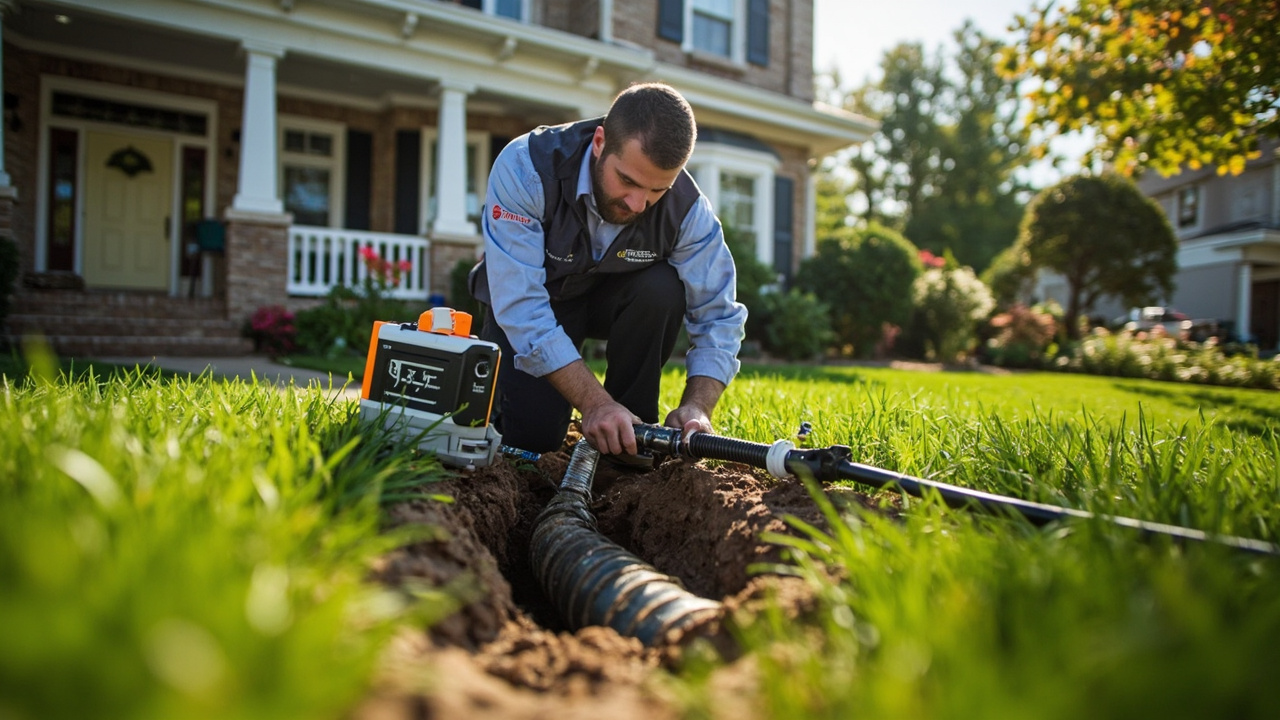
When pipes have collapsed or offset beyond repair, trenchless sewer replacement uses pipe bursting technology. A bursting head fragments the old pipe while simultaneously pulling a new HDPE line into place. The process requires only two small access pits at the start and end points. No excavation occurs along the pipe run. Your Milwaukee parking lot, landscaping, and concrete slabs remain undisturbed.

Both methods meet Wisconsin Plumbing Code requirements for commercial waste lines. The rehabilitated pipe passes MMSD inspection standards for flow capacity and structural integrity. You receive video documentation of the completed repair, proving compliance for your facility's maintenance records.

Trenchless pipe lining and no-dig sewer repair minimize disruption to your daily operations. You avoid permit delays, traffic control plans, and the liability exposure that comes with open trenches near customer foot traffic.

What Happens During Your Commercial Trenchless Repair

Trenchless Sewer Repair in Milwaukee | Zero Downtime for Your Business Operations
01

Diagnostic Video Inspection

A technician inserts a camera through an existing cleanout or access point to map your entire sewer line. The video identifies cracks, root intrusion, grease buildup, and structural defects. You receive a digital recording showing exact damage locations and depth measurements. This diagnostic phase takes 30 to 90 minutes and determines whether CIPP lining or pipe bursting provides the most cost-effective solution for your Milwaukee facility.
02

Line Cleaning and Preparation

High-pressure hydro jetting removes debris, grease, and root masses from the pipe interior. Water pressure reaches 4,000 PSI to scour pipe walls clean, creating the surface profile required for proper liner adhesion. This step clears blockages and prepares the line for CIPP installation. Cleaning typically completes within two to four hours depending on pipe length and contamination levels in your commercial waste system.
03

Liner Installation and Curing

The resin-saturated liner pulls through the cleaned pipe and inflates against the interior walls. Hot water or steam activates the curing process, bonding the liner to the existing pipe structure. Curing takes two to four hours. Once complete, the liner forms a smooth, corrosion-resistant pipe with no joints or seams. Your sewer line returns to full capacity the same day, meeting Milwaukee health codes and MMSD discharge requirements.

Why Milwaukee Businesses Choose Elite Plumbing Milwaukee for Commercial Sewer Repairs

Elite Plumbing Milwaukee specializes in commercial trenchless repairs for Milwaukee's industrial corridors, retail districts, and medical campuses. The company maintains relationships with Milwaukee Metropolitan Sewerage District inspectors and understands permit requirements for downtown commercial properties where excavation restrictions protect underground utilities beneath Wisconsin Avenue and Kilbourn Avenue.

Milwaukee's aging commercial infrastructure dates to the early 1900s in neighborhoods like Brewer's Hill and Yankee Hill. Cast iron and clay pipes installed before modern building codes now face failure from decades of freeze-thaw stress. Elite Plumbing Milwaukee carries the diagnostic equipment to assess these legacy systems without destructive excavation. The company's video inspection library documents thousands of Milwaukee commercial sewer lines, providing comparative data to predict failure points before emergency backups occur.

Commercial clients require repairs that meet health department standards while minimizing business interruption. A restaurant on Brady Street cannot afford a three-day excavation during peak season. A medical clinic in Wauwatosa cannot operate with raw sewage backing up into patient areas. Elite Plumbing Milwaukee schedules trenchless repairs during off-hours to protect your revenue stream. The work completes in hours, not days.

The company holds Master Plumber credentials recognized by the City of Milwaukee Department of Neighborhood Services. All CIPP installations comply with Wisconsin Administrative Code SPS 382 for commercial waste systems. You receive documentation proving code compliance for your facility's inspection records.

Milwaukee's commercial real estate market values properties with updated infrastructure. Trenchless sewer repairs using CIPP technology add documented value to your building's maintenance history. Prospective tenants and buyers see proof of modern, long-lasting underground systems that reduce future liability. Elite Plumbing Milwaukee provides the video evidence and compliance paperwork that protect your property investment.

What Your Milwaukee Business Can Expect from Commercial Trenchless Repair

Rapid Turnaround Without Operational Disruption

Most commercial trenchless sewer repairs complete within eight to twelve hours from diagnostic inspection to final video verification. Elite Plumbing Milwaukee schedules work during your lowest traffic periods to minimize customer impact. A restaurant repair begins after close and finishes before morning prep. A retail location repair occurs overnight to preserve daytime sales. You avoid multi-day shutdowns that traditional excavation requires. Your facility remains accessible to customers and employees throughout the repair process. Emergency repairs receive same-day response to stop sewage backups that threaten health code compliance.

Video Documentation at Every Phase

You receive high-resolution video of your sewer line before, during, and after repair. The initial diagnostic video shows exact damage locations with depth measurements and GPS coordinates for Milwaukee permit applications. Post-repair video proves the liner installed correctly with no gaps, wrinkles, or installation defects. This documentation satisfies Milwaukee Metropolitan Sewerage District inspection requirements and provides permanent records for your facility maintenance files. Video evidence protects you during property transactions, insurance claims, and health department inspections. You can verify the repair quality without trusting verbal assurances.

Structural Integrity That Outlasts Traditional Pipe

CIPP liners create a monolithic pipe structure with tensile strength exceeding the original clay or cast iron material. The cured epoxy resin resists root intrusion, corrosion, and joint separation that cause repeated failures in traditional pipe. Your rehabilitated line handles the same flow capacity as new pipe while eliminating the weak points at joint connections. The seamless interior surface reduces friction loss and prevents grease buildup that leads to blockages. Milwaukee's freeze-thaw cycles cannot crack a properly installed CIPP liner because the resin remains flexible enough to absorb ground movement while maintaining structural integrity.

Long-Term Performance with Minimal Maintenance

Trenchless repairs using CIPP technology require no special maintenance beyond routine drain cleaning. The smooth liner surface prevents debris accumulation that clogs traditional pipe. Annual video inspections verify ongoing performance and catch potential issues before they escalate to emergency failures. Elite Plumbing Milwaukee provides maintenance contracts tailored to commercial facilities with high waste volumes. Regular hydro jetting keeps your rehabilitated line flowing at full capacity. The upfront investment in trenchless repair eliminates the recurring costs of repeated excavations that plague properties with failing clay or cast iron systems.

Frequently Asked Questions

You Have Questions,
We Have Answers

Is trenchless sewer repair worth it? +

Yes, for commercial properties in Milwaukee. Trenchless sewer repair eliminates excavation costs, protects landscaping and hardscaping, and minimizes business downtime. Traditional dig-and-replace methods disrupt operations for days or weeks. Trenchless methods complete repairs in hours, keeping your facility operational. You avoid parking lot reconstruction, sidewalk replacement, and customer access issues. Milwaukee's freeze-thaw cycles and aging clay pipe infrastructure make trenchless particularly effective. The upfront cost is higher than basic excavation, but total project costs drop when you factor in site restoration, lost revenue, and liability reduction. For businesses near the Historic Third Ward or downtown, trenchless avoids permitting delays tied to street closures.

What are the disadvantages of trenchless pipe lining? +

Trenchless pipe lining requires existing pipe structure integrity. Severely collapsed lines cannot be lined and need replacement. Root intrusion must be cleared before lining, adding cost. The process reduces internal pipe diameter slightly, which may affect flow capacity in undersized commercial systems. Milwaukee's older buildings with cast iron or clay pipes sometimes have offset joints or bellies that complicate lining. You need camera inspection first to confirm candidacy. Liners cure slowly in cold weather, extending project timelines during Wisconsin winters. If your building has unknown lateral connections or serious structural damage, traditional excavation may be more predictable. Not all plumbing contractors offer trenchless services, limiting vendor options.

Does homeowners insurance cover sewage line repairs? +

Typically no. Standard commercial property insurance excludes maintenance-related issues and gradual deterioration. Insurers classify sewer line failure as predictable wear, not sudden accident. You may have coverage if a covered peril like flooding or fire directly damages the line. Review your policy's exclusions section. Some carriers offer add-on sewer backup coverage, but this usually covers interior damage, not the lateral line itself. Milwaukee building owners should budget separately for sewer infrastructure. If your line fails due to a vehicle strike or construction accident on adjacent property, liability insurance from the responsible party may apply. Document failure causes immediately. Consult your broker before filing claims.

How long does a trenchless sewer line last? +

Trenchless sewer liners last 50 to 100 years when properly installed. Cured-in-place pipe liners use epoxy resin that hardens into a corrosion-resistant structural pipe within the old host pipe. Milwaukee's soil chemistry and freeze-thaw cycles do not affect the liner itself, unlike clay or cast iron. Lifespan depends on installation quality, proper curing time, and correct resin selection for your pipe diameter and flow conditions. Commercial high-flow systems need thicker liners. The liner resists root penetration and chemical damage from industrial waste. Most manufacturers warranty materials for 50 years. You eliminate the joint failure common in sectional pipes. Expect this to outlast your building's mortgage.

What is the cheapest way to replace a sewer line? +

Spot repair using excavation at the failure point. If only one section of your lateral collapsed, digging a single access pit costs less than full-line replacement or trenchless lining. This works when camera inspection identifies isolated damage. Milwaukee properties with shallow lines under gravel or mulch areas reduce excavation complexity. However, cheapest does not mean best value. Piecemeal repairs often lead to repeated callouts as adjacent old pipe sections fail within months. For commercial properties, multiple service interruptions compound costs. Evaluate total cost of ownership, not just immediate outlay. If your line has multiple weak points or spans under paved areas, trenchless becomes more cost-effective despite higher material costs.

Do plumbers recommend sewer liners? +

Yes, when conditions suit the application. Professional plumbers use sewer liners for commercial properties with good host pipe structure, difficult access, or high restoration costs. Milwaukee plumbers recommend liners for buildings near rivers, under parking structures, or in dense urban areas where excavation disrupts business. Liners work well in properties with mature landscaping or historic facades you cannot disturb. However, plumbers will not recommend liners for severely deteriorated pipes, unknown lateral configurations, or budget-constrained projects where excavation makes more sense. Reputable contractors perform camera inspection first and present both options with transparent cost comparisons. If a plumber pushes one method without diagnostic evidence, get a second opinion.

How expensive is pipe relining? +

Commercial pipe relining in Milwaukee ranges from moderate to high cost per linear foot, depending on pipe diameter, access points, and site conditions. Larger diameter lines cost more due to material volume and equipment requirements. Buildings requiring multiple access points or complex lateral configurations increase labor costs. You pay for camera inspection, pipe cleaning, resin materials, installation labor, and curing time. Milwaukee projects during winter may incur weather-related delays. Compare quotes on a total project basis, not just per-foot pricing. Factor in avoided costs like pavement replacement, landscaping restoration, and business downtime. Request itemized estimates from licensed contractors. Cheapest bid often signals inexperience or substandard materials.

How often does a sewer line need to be replaced? +

Commercial sewer lines need replacement every 40 to 100 years, depending on material and maintenance. Cast iron pipes in Milwaukee's older commercial districts last 50 to 75 years before corrosion failure. Clay pipes crack from soil movement and root intrusion around the 60-year mark. Modern PVC or ABS lines last 100 years with proper installation. However, replacement timing depends more on condition than age. Annual camera inspections identify deterioration before catastrophic failure. Properties with heavy grease discharge, chemical waste, or high-flow conditions degrade pipes faster. Milwaukee's freeze-thaw cycles accelerate joint separation in sectional pipes. Replace lines when multiple sections show scaling, offset joints, or reduced flow capacity.

How do they do trenchless sewer repair? +

Technicians insert a flexible liner coated with epoxy resin into your existing pipe through an access point. The liner travels through the damaged section using water or air pressure. Once positioned, the crew inflates the liner with air or water bladders, pressing it against the host pipe walls. Heat or ambient curing hardens the resin, forming a new structural pipe inside the old one. Milwaukee contractors use truck-mounted equipment for this process. After curing, technicians trim ends, restore lateral connections, and perform final camera inspection. The method works for pipes from two inches to large commercial mains. No digging required except at access points.

What is the average lifespan of a sewer line? +

Sewer line lifespan varies by material. Clay pipes last 50 to 60 years. Cast iron pipes deteriorate in 50 to 75 years, faster in corrosive soil or near Milwaukee's industrial corridors. Orangeburg fiber pipes, common in mid-century construction, fail around 30 to 50 years. Modern PVC lines last 100 years or more. However, Milwaukee's soil conditions, tree root activity, and freeze-thaw cycles shorten these estimates. Commercial properties with grease traps, chemical discharge, or high-flow systems degrade pipes faster. Annual inspections reveal actual condition better than age alone. Replace lines showing significant scaling, bellying, or joint separation regardless of installation date.

How Milwaukee's Clay Soil and Mature Trees Accelerate Commercial Sewer Line Failure

Milwaukee sits on heavy clay soil that expands during wet seasons and contracts during winter freeze cycles. This constant movement stresses rigid sewer pipes installed in the 1920s through 1960s throughout downtown, the Historic Third Ward, and older industrial areas along the Menomonee River. Clay pipes crack at joints. Cast iron corrodes from the outside in. Mature elm, oak, and maple trees lining commercial streets send roots through these cracks seeking moisture. Once roots infiltrate, they expand and fragment the pipe structure. Traditional excavation to replace these lines requires permits from the City of Milwaukee, coordination with We Energies for utility clearance, and restoration of concrete, asphalt, and landscaping. Trenchless pipe lining bypasses these complications by creating a new pipe inside the damaged structure without surface disruption.

Elite Plumbing Milwaukee operates under Master Plumber licenses recognized by Milwaukee's Department of Neighborhood Services. The company understands local code requirements for commercial waste systems and maintains direct communication with Milwaukee Metropolitan Sewerage District inspectors who approve rehabilitated lines for reconnection to the municipal system. This local knowledge speeds permit approval and ensures your repair meets all regulatory standards. Milwaukee business owners benefit from working with contractors who know the specific challenges of repairing infrastructure in a city where underground utilities crowd narrow right-of-ways and historic building foundations sit close to property lines. Trenchless technology solves problems that excavation cannot address without weeks of delays and exponential costs.
Plumbing Services in The Milwaukee Area

View our service area on the map to see how we can serve you. We proudly provide top-tier plumbing services throughout the Milwaukee region and its surrounding communities. Our dedicated team is just a call or click away, ready to deliver the reliable solutions you need, right to your doorstep. We are committed to being your trusted local plumbing experts for any and all jobs.

Address:
Elite Plumbing Milwaukee, 2201 N Doctor M.L.K. Jr Dr, Milwaukee, WI, 53212

Additional Services We Offer

Our news updates

Latest Articles & News from The Blogs

Why your South Milwaukee basement drains smell like a swamp after a heavy storm The first heavy rain hits South…

Why your South Milwaukee basement drains smell like a swamp after a heavy storm

Why your South Milwaukee basement drains smell like a swamp after a heavy storm The first heavy rain hits South…

What to consider before installing a gas line for a professional range in New Berlin

What to consider before installing a gas line for a professional range in New Berlin Installing a gas line for…

Where you can legally drain your sump pump water in Greenfield

Where you can legally drain your sump pump water in Greenfield Your sump pump works hard to keep your Greenfield…

Contact Us

Call Elite Plumbing Milwaukee at (414) 375-7955 for same-day video inspection and trenchless repair estimates. Your Milwaukee business needs sewer infrastructure that works without disrupting operations or customers.