
Choosing between a gas or electric dryer hookup in your Greenfield laundry room
Deciding between a gas or electric dryer in your Greenfield home means weighing installation requirements, operating costs, and long-term performance. Gas dryers heat faster and cost less to run per load but require a gas line hookup and proper ventilation. Electric dryers need only a 240-volt outlet but typically cost more to operate over time. Your choice affects not just the appliance but the entire laundry room infrastructure. This guide breaks down the technical requirements, local building codes, and installation considerations specific to Milwaukee homes so you can make the right decision for your space and budget. WE Energies.
Key Differences at a Glance
| Feature | Gas Dryer | Electric Dryer |
|---|---|---|
| Installation Complexity | Requires licensed plumber for gas line | Needs 240V outlet and circuit |
| Upfront Cost | $50-100 more than electric | Lower initial purchase price |
| Operating Cost (WE Energies) | $0.15-0.20 per load | $0.25-0.35 per load |
| Drying Speed | 25% faster heating | Slower heat-up time |
| Venting Requirements | Rigid metal duct (4-inch) | Rigid metal duct (4-inch) |
Gas Dryer Installation Requirements
Installing a gas dryer in your Greenfield laundry room requires more than just connecting the appliance. A licensed master plumber must extend or modify the gas line to reach the laundry area. This involves sizing the pipe correctly for BTU demand—most gas dryers require 22,000-30,000 BTUs per hour. The plumber installs a proper shut-off valve within six feet of the appliance and tests the line for leaks using a bubble solution or electronic detector.. Read more about Why your second-floor laundry room needs a floor drain and a drip pan in Wauwatosa.
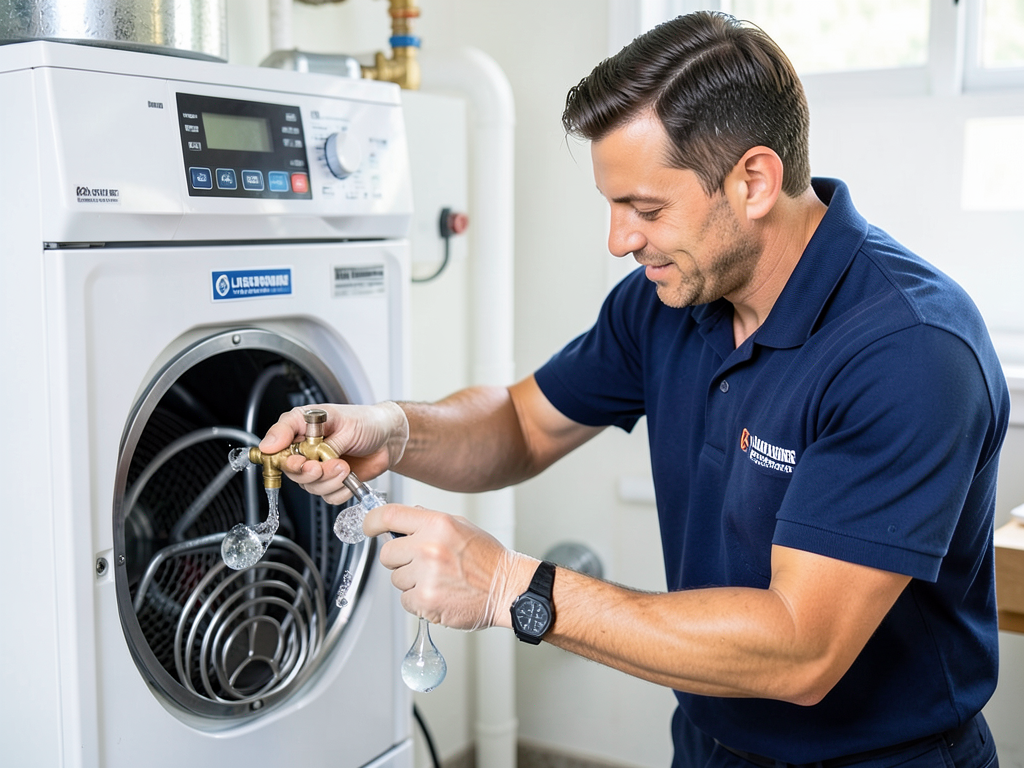
A licensed plumber testing a gas line connection with bubble solution to check for leaks before dryer installation.
Milwaukee’s building code requires all gas connections to comply with Wisconsin DSPS regulations and the International Fuel Gas Code. The gas line must be either black iron pipe or approved CSST (Corrugated Stainless Steel Tubing) with proper grounding to prevent lightning damage. We Energies recommends a dedicated 1/2-inch gas line for most residential dryers. Never attempt a DIY gas connection—Wisconsin law prohibits unlicensed individuals from working on gas piping due to explosion and carbon monoxide risks. Wisconsin DSPS.
Electric Dryer Installation Requirements
Electric dryers need a dedicated 240-volt, 30-amp circuit with a NEMA 14-30R outlet. This requires running 10-gauge or 8-gauge wire from your electrical panel to the laundry room. Older homes might have only a 120-volt outlet, which won’t power a modern electric dryer. The circuit breaker must be properly sized and labeled.

A NEMA 14-30R 240-volt outlet installed in a laundry room for electric dryer hookup.
Electric dryers come with either a 3-prong or 4-prong power cord. Since 2000, the National Electrical Code requires 4-prong cords for new installations to provide a separate ground path. If your home has an older 3-prong outlet, you’ll need to upgrade the outlet and wiring to meet current code. This is not optional—it’s a safety requirement that prevents electrical shock and fire hazards.
Local Building Codes and Safety
Milwaukee’s Department of Neighborhood Services enforces strict requirements for both gas and electric dryer installations. All gas appliances must have proper venting to the exterior using rigid metal ducting—flexible plastic ducts are prohibited due to fire risk. The vent pipe must have a backdraft damper and terminate at least three feet from any opening or air intake.
Rigid metal dryer vent pipe installed through an exterior wall with proper termination hood. Reliable Milwaukee sump pump repair services to keep your basement dry.
Carbon monoxide detectors are mandatory in all Wisconsin homes with gas appliances. The detector must be installed within 15 feet of sleeping areas and on every floor. For gas dryer installations, the plumber will pressure-test the gas line and verify all connections meet WE Energies safety standards. Electric installations must pass inspection for proper grounding and circuit protection. These aren’t just suggestions—they’re legal requirements that protect your family.
Average Installation Costs in SE Wisconsin
Installation costs vary significantly between gas and electric setups. A basic electric dryer installation with existing 240V wiring runs $150-250 for labor. If you need a new outlet and circuit, expect $400-600 for electrical work plus permit fees of $50-100.
Gas dryer installation costs more due to plumbing requirements. Extending a gas line to your laundry room typically costs $300-500 for the line itself, plus $150-250 for the final connection and testing. If your home lacks a nearby gas line, the cost can exceed $1,000. Permit fees for gas work run $75-150 in Milwaukee County.
These are 2026 rates from licensed contractors in the Milwaukee metro area. Prices include labor, materials, and code-compliant installation. DIY installations void warranties and violate Wisconsin law for gas work.
Can You Switch Between Gas and Electric?
Converting from electric to gas is common in Greenfield homes where homeowners want lower operating costs. The process involves running a new gas line, installing a proper shut-off valve, and ensuring adequate ventilation. This typically takes 4-6 hours for a straightforward conversion.
Switching from gas to electric is simpler if you already have 240V service. You’ll disconnect the gas line (by a licensed plumber) and plug in the new dryer. However, if you lack the proper electrical outlet, you’ll need an electrician to install the circuit and outlet first.
Before any conversion, have a professional assess your utility connections. Not all homes have accessible gas lines, and some laundry rooms lack space for proper venting. A site inspection prevents costly surprises mid-project. Professional drain cleaning in Shorewood for stubborn kitchen clogs.
Frequently Asked Questions
Which is cheaper to operate in Milwaukee?
Gas dryers cost approximately 40% less to operate than electric models based on current WE Energies rates. Natural gas costs about $0.90 per therm while electricity runs $0.14 per kWh. Over a dryer’s 10-13 year lifespan, gas users save $500-800 on utility bills.
How long does installation take?
A straightforward installation with existing connections takes 1-2 hours. New gas line installation or electrical circuit work requires 4-6 hours plus inspection time. Most installations can be completed in a single day once permits are approved.
Do I need a permit in Greenfield?
Yes. Both gas and electrical work require permits from Milwaukee County. Gas line modifications need a plumbing permit, while new electrical circuits require an electrical permit. Your contractor typically handles permit acquisition, but DIY work cannot legally obtain permits for these tasks.
Can I install a dryer vent through the roof?
Roof venting is allowed but not recommended due to increased fire risk and difficulty in cleaning. Side wall venting is preferred. If roof venting is necessary, it must use rigid metal duct with proper flashing and a high-quality vent cap to prevent backdrafts.
What size gas line do I need?
Most residential gas dryers require a 1/2-inch supply line. The plumber calculates the total BTU demand of all gas appliances on that line to ensure adequate pressure. Undersized lines cause poor dryer performance and potential safety hazards.
Should I get a permit for a simple swap?
Yes. Even replacing a like-for-like appliance requires inspection in Wisconsin. Permits ensure the installation meets current safety codes. Unpermitted work can cause insurance issues and complicate future home sales.
How do I know if I have a gas line available?
Check your gas meter location and look for black iron pipes in your basement or utility area. If you’re unsure, a licensed plumber can trace your gas system and determine if an extension to your laundry room is feasible. Who to call when your Bay View basement floods at 3 AM.
What’s the difference between 3-prong and 4-prong cords?
3-prong cords combine the neutral and ground wires, while 4-prong cords keep them separate for improved safety. Since 2000, new electric dryers must use 4-prong cords. Using the wrong cord type is a code violation and safety hazard.
Making Your Final Decision
Your choice between gas and electric should consider more than just purchase price. Factor in your home’s existing infrastructure, local utility rates, and how long you plan to stay in the home. Gas dryers make sense if you have accessible gas service and plan to stay 5+ years—the energy savings offset the higher installation cost.
Electric dryers work better for homes without gas service or where installation costs would be prohibitive. They’re also simpler to install and maintain. Consider your laundry room’s layout too—some spaces lack proper ventilation for gas appliances.
Call (414) 375-7955 today to schedule a professional assessment of your Greenfield laundry room. Our licensed plumbers and electricians will evaluate your current setup, discuss your needs, and provide a detailed quote for code-compliant installation. Don’t risk DIY installation—your family’s safety and your home’s value depend on proper hookups.
{
“@context”: “https://schema.org”,
“@type”: “BlogPosting”,
“headline”: “Choosing between a gas or electric dryer hookup in your Greenfield laundry room”,
“description”: “Compare gas vs electric dryer installation in Greenfield. Get local Milwaukee costs, code requirements, and expert advice from licensed plumbers.”,
“wordCount”: 1438,
“datePublished”: “2026-04-07T10:00:00.000Z”,
“dateModified”: “2026-04-07T10:00:00.000Z”,
“inLanguage”: “en-US”,
“mainEntityOfPage”: {
“@type”: “WebPage”,
“@id”: “https://eliteplumbingmilwaukee.com”
},
“publisher”: {
“@type”: “LocalBusiness”,
“name”: “Elite Plumbing Milwaukee”,
“url”: “https://eliteplumbingmilwaukee.com”
},
“author”: {
“@type”: “Organization”,
“name”: “Elite Plumbing Milwaukee”,
“url”: “https://eliteplumbingmilwaukee.com”
},
“image”: {
“@type”: “ImageObject”,
“url”: “https://eliteplumbingmilwaukee.com/wp-content/uploads/2026/03/choosing-between-a-gas-or-electric-dryer-hookup-in-1.png”
}
}
{
“@context”: “https://schema.org”,
“@type”: “Plumber”,
“name”: “Elite Plumbing Milwaukee”,
“url”: “https://eliteplumbingmilwaukee.com”,
“address”: {
“@type”: “PostalAddress”,
“addressLocality”: “Milwaukee”
},
“areaServed”: {
“@type”: “City”,
“name”: “Milwaukee”
}
}
{
“@context”: “https://schema.org”,
“@type”: “FAQPage”,
“mainEntity”: [
{
“@type”: “Question”,
“name”: “Can You Switch Between Gas and Electric?”,
“acceptedAnswer”: {
“@type”: “Answer”,
“text”: “Converting from electric to gas is common in Greenfield homes where homeowners want lower operating costs. The process involves running a new gas line, installing a proper shut-off valve, and ensuring adequate ventilation. This typically takes 4-6 hours for a straightforward conversion.\n\nSwitching from gas to electric is simpler if you already have 240V service. You’ll disconnect the gas line (by a licensed plumber) and plug in the new dryer. However, if you lack the proper electrical outlet, you’ll need an electrician to install the circuit and outlet first.\n\nBefore any conversion, have a professional assess your utility connections. Not all homes have accessible gas lines, and some laundry rooms lack space for proper venting. A site inspection prevents costly surprises mid-project. Professional drain cleaning in Shorewood for stubborn kitchen clogs.”
}
},
{
“@type”: “Question”,
“name”: “Which is cheaper to operate in Milwaukee?”,
“acceptedAnswer”: {
“@type”: “Answer”,
“text”: “Gas dryers cost approximately 40% less to operate than electric models based on current WE Energies rates. Natural gas costs about $0.90 per therm while electricity runs $0.14 per kWh. Over a dryer’s 10-13 year lifespan, gas users save $500-800 on utility bills.”
}
},
{
“@type”: “Question”,
“name”: “How long does installation take?”,
“acceptedAnswer”: {
“@type”: “Answer”,
“text”: “A straightforward installation with existing connections takes 1-2 hours. New gas line installation or electrical circuit work requires 4-6 hours plus inspection time. Most installations can be completed in a single day once permits are approved.”
}
},
{
“@type”: “Question”,
“name”: “Do I need a permit in Greenfield?”,
“acceptedAnswer”: {
“@type”: “Answer”,
“text”: “Yes. Both gas and electrical work require permits from Milwaukee County. Gas line modifications need a plumbing permit, while new electrical circuits require an electrical permit. Your contractor typically handles permit acquisition, but DIY work cannot legally obtain permits for these tasks.”
}
},
{
“@type”: “Question”,
“name”: “Can I install a dryer vent through the roof?”,
“acceptedAnswer”: {
“@type”: “Answer”,
“text”: “Roof venting is allowed but not recommended due to increased fire risk and difficulty in cleaning. Side wall venting is preferred. If roof venting is necessary, it must use rigid metal duct with proper flashing and a high-quality vent cap to prevent backdrafts.”
}
},
{
“@type”: “Question”,
“name”: “What size gas line do I need?”,
“acceptedAnswer”: {
“@type”: “Answer”,
“text”: “Most residential gas dryers require a 1/2-inch supply line. The plumber calculates the total BTU demand of all gas appliances on that line to ensure adequate pressure. Undersized lines cause poor dryer performance and potential safety hazards.”
}
},
{
“@type”: “Question”,
“name”: “Should I get a permit for a simple swap?”,
“acceptedAnswer”: {
“@type”: “Answer”,
“text”: “Yes. Even replacing a like-for-like appliance requires inspection in Wisconsin. Permits ensure the installation meets current safety codes. Unpermitted work can cause insurance issues and complicate future home sales.”
}
},
{
“@type”: “Question”,
“name”: “How do I know if I have a gas line available?”,
“acceptedAnswer”: {
“@type”: “Answer”,
“text”: “Check your gas meter location and look for black iron pipes in your basement or utility area. If you’re unsure, a licensed plumber can trace your gas system and determine if an extension to your laundry room is feasible. Who to call when your Bay View basement floods at 3 AM.”
}
},
{
“@type”: “Question”,
“name”: “What’s the difference between 3-prong and 4-prong cords?”,
“acceptedAnswer”: {
“@type”: “Answer”,
“text”: “3-prong cords combine the neutral and ground wires, while 4-prong cords keep them separate for improved safety. Since 2000, new electric dryers must use 4-prong cords. Using the wrong cord type is a code violation and safety hazard.”
}
}
]
}
{
“@context”: “https://schema.org”,
“@type”: “BreadcrumbList”,
“itemListElement”: [
{
“@type”: “ListItem”,
“position”: 1,
“name”: “Home”,
“item”: “https://eliteplumbingmilwaukee.com”
},
{
“@type”: “ListItem”,
“position”: 2,
“name”: “Blog”,
“item”: “https://eliteplumbingmilwaukee.com/blog”
},
{
“@type”: “ListItem”,
“position”: 3,
“name”: “Choosing between a gas or electric dryer hookup in your Greenfield laundry room”
}
]
}
{
“@context”: “https://schema.org”,
“@type”: “Service”,
“serviceType”: “Plumbing”,
“provider”: {
“@type”: “LocalBusiness”,
“name”: “Elite Plumbing Milwaukee”,
“url”: “https://eliteplumbingmilwaukee.com”
},
“areaServed”: {
“@type”: “City”,
“name”: “Milwaukee”
},
“description”: “Compare gas vs electric dryer installation in Greenfield. Get local Milwaukee costs, code requirements, and expert advice from licensed plumbers.”
}