
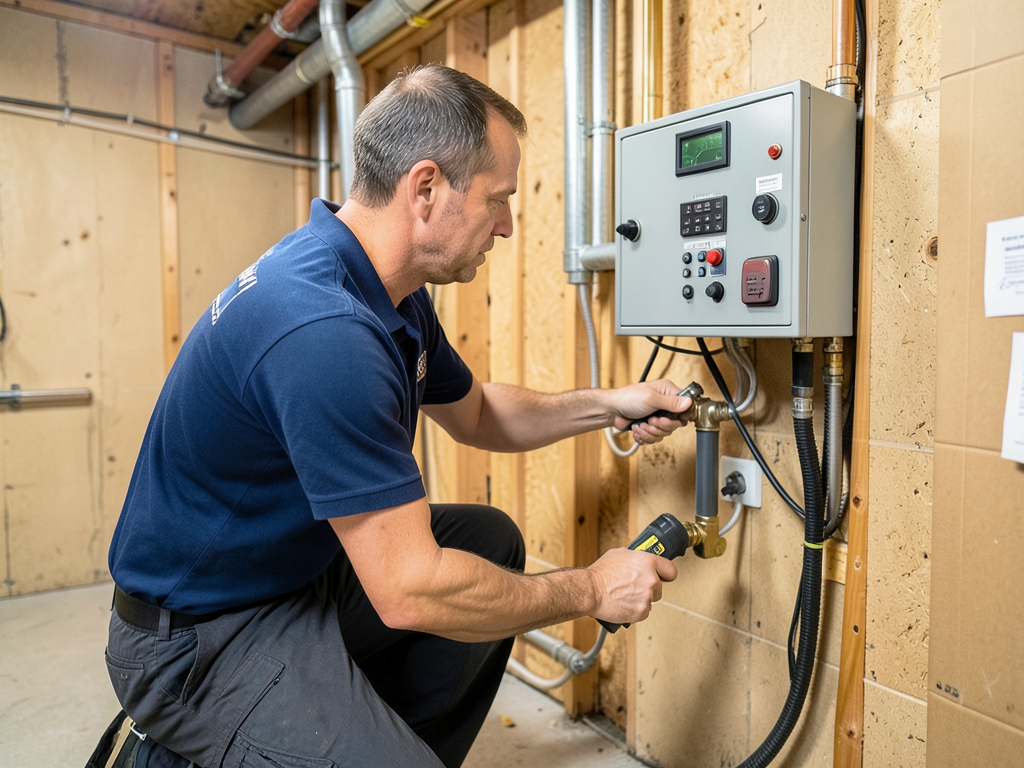
The Spring Thaw Threat: Why Mequon Basements Need Backup Protection
Mequon homeowners know the drill. When Lake Michigan ice melts and spring thunderstorms roll through Ozaukee County, the ground swells with water. Your primary sump pump works overtime, but what happens when the power fails during that critical moment? That’s when a backup system becomes your basement’s lifeline. This guide breaks down the two main options – battery backup and water-powered backup – specifically for Mequon’s unique conditions. Who to call when your Bay View basement floods at 3 AM.
How Battery Backup Sump Pumps Work (Pros and Cons)
Battery backup systems use a separate pump connected to a deep-cycle battery. When your main pump loses power, the backup activates automatically. These systems typically move 1,500-2,500 gallons per hour at a 10-foot lift, giving you 8-12 hours of continuous operation depending on battery capacity. City of Mequon permit requirements.
The technology is straightforward. A controller monitors voltage and activates the pump when it detects a power loss. Modern units include alarms that sound when batteries need replacement or when pumping activity exceeds normal levels.
Advantages: Simple installation, works anywhere regardless of water pressure, no impact on your water bill, and you control exactly when to replace batteries.
Disadvantages: Batteries degrade over time (typically 3-5 years), require periodic testing, and have limited run time during extended outages. A single severe storm could drain your battery before power returns.
The Reality of Water-Powered Backup Pumps in Milwaukee
Water-powered systems use municipal water pressure to create a vacuum that removes water from your sump pit. These pumps have no moving parts and can run indefinitely as long as city water flows. During Milwaukee’s spring flooding events, that unlimited runtime becomes crucial. The best options for water heater replacement in Wauwatosa.
The venturi effect creates suction – for every gallon of city water used, these pumps typically remove 1-2 gallons of sump water. They require consistent water pressure between 40-90 PSI and a dedicated 3/4-inch supply line.
Advantages: Unlimited runtime during city water service, no battery replacement costs, minimal maintenance, and exceptional reliability during extended outages.
Disadvantages: Increases your water bill during operation, requires adequate city water pressure (many Mequon homes near the lakeshore have marginal pressure), and needs proper backflow prevention to meet Wisconsin DSPS codes.
Side-by-Side Comparison: Performance, Cost, and Maintenance
| Feature | Battery Backup | Water-Powered Backup |
|---|---|---|
| Initial Cost | $500-800 | $400-600 |
| Annual Maintenance | $50-75 (battery testing) | $25-40 (valve testing) |
| Runtime During Outage | 8-12 hours typical | Unlimited (city water available) |
| Installation Complexity | Moderate (electrical) | High (plumbing + backflow) |
| Milwaukee Water Rate Impact | None | $0.05-0.15 per gallon pumped |
Crucial Requirements: Does Your Home Meet the PSI Standards?
Before choosing water-powered, you need to verify your home’s water pressure. Mequon’s water pressure varies significantly by elevation and distance from the main supply lines. Homes near Lake Michigan’s shoreline often have lower pressure due to the gradual elevation rise.
Test your pressure using a simple gauge from any hardware store. Attach it to an outdoor spigot and check the reading. You need at least 40 PSI sustained for reliable operation. Many Mequon homes in the Pioneer Road area test between 35-45 PSI, which is borderline. Reliable Milwaukee sump pump repair services to keep your basement dry.
Wisconsin DSPS plumbing code Section SPS 382.37 requires a reduced pressure zone (RPZ) backflow preventer for water-powered systems. This device prevents contaminated sump water from flowing back into your clean water supply. The RPZ must be tested annually by a certified tester – a requirement many homeowners overlook.
Milwaukee Weather Hazards: Why a Backup is Mandatory
Mequon sits in a unique microclimate where Lake Michigan’s influence creates unpredictable weather patterns. Spring thunderstorms often arrive with power outages already in progress. The 2023 Memorial Day storms knocked out power to 15,000 Ozaukee County residents for up to 48 hours.. Read more about Getting your basement ready for a wet spring in the low-lying areas of Elm Grove.
During these events, finished basements with carpet, drywall, and stored belongings become vulnerable. Water damage restoration costs in Mequon average $3,500-8,000 per incident, with many claims exceeding $10,000 for finished spaces.
The soil composition adds another layer of complexity. Mequon’s mix of clay and loam retains water longer than sandy soils, creating prolonged saturation periods. This means your sump pump cycles more frequently, draining battery backups faster or consuming more city water through powered systems. Professional drain cleaning in Shorewood for stubborn kitchen clogs.
Final Verdict: Our Recommendation for Local Homeowners
For most Mequon homes, we recommend battery backup systems. They provide reliable protection without the complexity of plumbing modifications and annual RPZ testing. The 3-5 year battery replacement cycle costs less than the potential water bill increases from a powered system during heavy use.
However, if you have consistent 50+ PSI water pressure, a dedicated 3/4-inch supply line, and want unlimited runtime capability, a water-powered system offers superior protection for extended outages. Just factor in the $150-200 annual testing and potential water usage costs.
The best solution for many Mequon homeowners is a dual-system approach: primary battery backup with a secondary water-powered system. This provides redundancy if either system fails during that critical spring storm.
Installation Considerations: Professional vs. DIY
Professional installation ensures your system meets local codes and integrates properly with your existing plumbing. A licensed plumber will verify water pressure, install proper backflow prevention, and test the entire system under load conditions.
DIY installation might save $200-300 upfront but risks code violations, improper sizing, and system failure when you need it most. Insurance companies often deny claims for damage caused by non-code-compliant installations.
Maintenance Schedule: Keeping Your Backup Ready
Test your backup system every 3 months by pouring water into the sump pit until the backup activates. Listen for unusual noises and verify the alarm functions properly.
For battery systems, check water levels in lead-acid batteries quarterly and replace the entire unit every 3-5 years regardless of apparent function. For water-powered systems, schedule annual RPZ testing with a certified backflow tester.
Smart Technology Integration
Modern backup systems include Wi-Fi connectivity that sends alerts to your smartphone when pumping activates or when maintenance is due. Some systems integrate with whole-home generators, automatically switching to generator power when available.
These smart features provide peace of mind for Mequon residents who travel frequently during storm season. You’ll know immediately if your basement is at risk, even when you’re away.
Cost-Benefit Analysis: Breaking Down the Numbers
A quality battery backup system costs $600-800 installed. Over a 5-year lifespan with annual testing, your total investment is approximately $750-900.
A water-powered system costs $400-600 installed plus $150-200 annually for RPZ testing and potential water usage. Over five years, you’re looking at $1,150-1,400 total investment.
The difference narrows when you factor in the peace of mind from unlimited runtime versus the convenience of simple battery replacement. Both systems protect your basement effectively when properly installed and maintained.
Frequently Asked Questions
Will a water-powered pump significantly increase my water bill?
During normal operation, probably not. But during heavy flooding when your sump cycles every few minutes, you could use 100-300 gallons of city water per day. At Milwaukee’s current rates, that’s $3-9 per day of heavy use.
How long does a battery backup last during a storm?
Most quality systems provide 8-12 hours of continuous pumping. If your sump cycles every 5 minutes, you might get 24-36 hours of protection. The actual duration depends on your pump’s GPM rating and battery capacity.
Do I need permits for sump pump installation in Mequon?
Yes. The City of Mequon requires plumbing permits for any new sump pump installation or major modifications. Water-powered systems also need additional permits for the RPZ installation.
Don’t Wait for the Next Storm – Protect Your Basement Today
Milwaukee’s spring weather patterns are becoming more extreme. The decision between battery and water-powered backup isn’t just about technology – it’s about protecting your home investment from thousands in potential water damage.
Our licensed plumbers have installed hundreds of backup systems throughout Mequon and understand the specific challenges of your neighborhood’s water pressure and soil conditions. We’ll help you choose the right system and ensure it meets all Wisconsin plumbing codes.
Call (414) 375-7955 today to schedule your inspection. We’ll test your water pressure, evaluate your current sump system, and recommend the best backup solution for your Mequon home. Don’t wait until the next storm – pick up the phone and call (414) 375-7955 before the next spring thaw hits.
Need emergency help right now? Our 24/7 emergency response team is ready to assist with any sump pump failures or basement flooding in Mequon and throughout the greater Milwaukee area.
You may also find this helpful. How to clean the sludge and debris out of your Germantown sump pump pit.
You may also find this helpful. Where you can legally drain your sump pump water in Greenfield.
{
“@context”: “https://schema.org”,
“@type”: “BlogPosting”,
“headline”: “Deciding between a battery or water-powered backup sump pump for your Mequon basement”,
“description”: “Compare battery vs water-powered backup sump pumps for Mequon basements. Learn local codes, costs, and which system handles Milwaukee’s spring flooding best.”,
“wordCount”: 1427,
“datePublished”: “2026-05-16T12:38:00.000Z”,
“dateModified”: “2026-05-16T12:38:00.000Z”,
“inLanguage”: “en-US”,
“mainEntityOfPage”: {
“@type”: “WebPage”,
“@id”: “https://eliteplumbingmilwaukee.com”
},
“publisher”: {
“@type”: “LocalBusiness”,
“name”: “Elite Plumbing Milwaukee”,
“url”: “https://eliteplumbingmilwaukee.com”
},
“author”: {
“@type”: “Organization”,
“name”: “Elite Plumbing Milwaukee”,
“url”: “https://eliteplumbingmilwaukee.com”
},
“image”: {
“@type”: “ImageObject”,
“url”: “https://eliteplumbingmilwaukee.com/wp-content/uploads/2026/03/deciding-between-a-battery-or-water-powered-backup-1.png”
}
}
{
“@context”: “https://schema.org”,
“@type”: “Plumber”,
“name”: “Elite Plumbing Milwaukee”,
“url”: “https://eliteplumbingmilwaukee.com”,
“address”: {
“@type”: “PostalAddress”,
“addressLocality”: “Milwaukee”
},
“areaServed”: {
“@type”: “City”,
“name”: “Milwaukee”
}
}
{
“@context”: “https://schema.org”,
“@type”: “FAQPage”,
“mainEntity”: [
{
“@type”: “Question”,
“name”: “Crucial Requirements: Does Your Home Meet the PSI Standards?”,
“acceptedAnswer”: {
“@type”: “Answer”,
“text”: “Before choosing water-powered, you need to verify your home’s water pressure. Mequon’s water pressure varies significantly by elevation and distance from the main supply lines. Homes near Lake Michigan’s shoreline often have lower pressure due to the gradual elevation rise.”
}
},
{
“@type”: “Question”,
“name”: “Will a water-powered pump significantly increase my water bill?”,
“acceptedAnswer”: {
“@type”: “Answer”,
“text”: “During normal operation, probably not. But during heavy flooding when your sump cycles every few minutes, you could use 100-300 gallons of city water per day. At Milwaukee’s current rates, that’s $3-9 per day of heavy use.”
}
},
{
“@type”: “Question”,
“name”: “How long does a battery backup last during a storm?”,
“acceptedAnswer”: {
“@type”: “Answer”,
“text”: “Most quality systems provide 8-12 hours of continuous pumping. If your sump cycles every 5 minutes, you might get 24-36 hours of protection. The actual duration depends on your pump’s GPM rating and battery capacity.”
}
},
{
“@type”: “Question”,
“name”: “Do I need permits for sump pump installation in Mequon?”,
“acceptedAnswer”: {
“@type”: “Answer”,
“text”: “Yes. The City of Mequon requires plumbing permits for any new sump pump installation or major modifications. Water-powered systems also need additional permits for the RPZ installation.”
}
}
]
}
{
“@context”: “https://schema.org”,
“@type”: “BreadcrumbList”,
“itemListElement”: [
{
“@type”: “ListItem”,
“position”: 1,
“name”: “Home”,
“item”: “https://eliteplumbingmilwaukee.com”
},
{
“@type”: “ListItem”,
“position”: 2,
“name”: “Blog”,
“item”: “https://eliteplumbingmilwaukee.com/blog”
},
{
“@type”: “ListItem”,
“position”: 3,
“name”: “Deciding between a battery or water-powered backup sump pump for your Mequon basement”
}
]
}
{
“@context”: “https://schema.org”,
“@type”: “Service”,
“serviceType”: “Plumbing”,
“provider”: {
“@type”: “LocalBusiness”,
“name”: “Elite Plumbing Milwaukee”,
“url”: “https://eliteplumbingmilwaukee.com”
},
“areaServed”: {
“@type”: “City”,
“name”: “Milwaukee”
},
“description”: “Compare battery vs water-powered backup sump pumps for Mequon basements. Learn local codes, costs, and which system handles Milwaukee’s spring flooding best.”
}