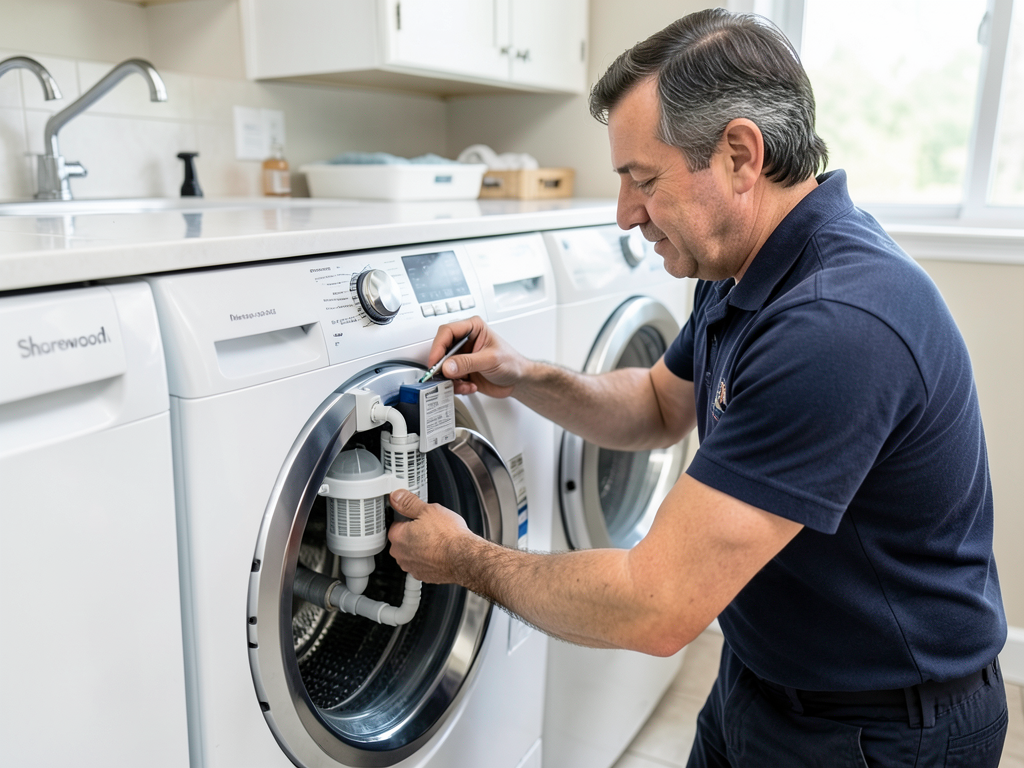
How to install a microplastic filter for your laundry machine in Shorewood
Microplastics from synthetic fabrics are entering Lake Michigan at an alarming rate. A single laundry load releases up to 700,000 microfibers that pass through wastewater treatment plants. Installing a microplastic filter on your washing machine in Shorewood stops these particles before they reach the Milwaukee Metropolitan Sewerage District system and protects your home’s plumbing from lint buildup. The best options for water heater replacement in Wauwatosa.
Shorewood homeowners can choose between professional installation of the Filtrol 160 or PlanetCare systems. Both capture 80-90% of microfibers using mechanical filtration. The process takes 1-2 hours and requires compliance with Wisconsin Department of Safety and Professional Services plumbing codes. Filters need cleaning every 3-6 months depending on water hardness and laundry frequency. Professional drain cleaning in Shorewood for stubborn kitchen clogs.
Why Milwaukee Water Protection Starts in Your Laundry Room
Lake Michigan provides drinking water for 1.2 million people in the Milwaukee area. Microplastics are now found in 80% of tap water samples from the Great Lakes region. Shorewood sits directly on the Milwaukee River watershed, making local laundry filtration critical for downstream water quality. Reliable Milwaukee sump pump repair services to keep your basement dry.
The Milwaukee Metropolitan Sewerage District treats 300 million gallons of wastewater daily. Their advanced filtration systems cannot capture particles smaller than 100 microns. Microplastic fibers range from 5-20 microns, allowing them to pass through treatment and enter Lake Michigan. Professional installation ensures your filter connects properly to the standpipe and discharge hose without creating cross-contamination risks.
Wisconsin DSPS Plumbing Code Section SPS 382.50 requires proper air gaps for washing machine drains. A certified plumber verifies your installation meets these standards while protecting against backflow. This compliance matters for both environmental protection and home insurance coverage.
How Microplastic Filters Work with Your Plumbing System
Microplastic filters use fine mesh screens or membrane technology to capture synthetic fibers during the drain cycle. The Filtrol 160 employs a 60-micron stainless steel mesh that traps fibers while allowing water to flow freely. PlanetCare uses replaceable cartridges with electrostatically charged fibers that attract microplastics.
Installation connects the filter between your washing machine’s discharge hose and the standpipe. The standpipe must extend 18-30 inches above the trap weir per Wisconsin code. Filters add minimal back pressure – typically 2-3 psi – which most modern washing machines handle without issues.
Shorewood homes built before 1980 often have cast iron standpipes that can corrode over time. A plumber inspects these connections for leaks or weak points before installing a filter. The filter housing mounts to the wall using corrosion-resistant brackets that keep it accessible for maintenance. What to do if your pipes freeze during a Milwaukee cold snap.
Water hardness in Shorewood averages 12-15 grains per gallon. This mineral content can reduce filter efficiency by 15-20% over time. Professional installation includes testing your water hardness and recommending cleaning schedules based on your specific conditions.
Professional Installation vs. DIY: Wisconsin Plumbing Code Considerations
DIY microplastic filter installation risks violating Wisconsin plumbing codes. Improper connections can create cross-connections between potable and wastewater systems. This violation of DSPS Section 382.35 can result in fines and mandatory system replacement.
Professional installation ensures proper venting. Washing machine drains require a 2-inch trap arm minimum length of 3 feet. The vent must connect within 6 feet of the trap. DIY installers often overlook these requirements, creating slow drainage and potential sewer gas entry.
Warranty coverage differs significantly between DIY and professional installation. Filtrol 160 offers a 10-year warranty only when installed by certified professionals. DIY installation voids this coverage. PlanetCare provides a 2-year warranty regardless of installation method, but professional installation includes labor guarantees.
Milwaukee’s freeze-thaw cycles affect plumbing connections. Temperature swings from -10°F to 90°F cause pipe expansion and contraction. Professional installers use flexible connectors and proper insulation to prevent filter housing cracks during these cycles.
Cost comparison shows professional installation averaging $250-350 versus $80-120 for DIY kits. However, DIY failures often require emergency plumbing service at $150-200 per hour. The initial savings disappear quickly if connections leak or code violations are discovered during inspections.
Best Microplastic Filters for Milwaukee Homes (Product Comparisons)
The Filtrol 160 dominates the professional installation market with its industrial-grade construction. The stainless steel housing resists Shorewood’s high humidity levels. Filter bags capture 90% of microfibers down to 60 microns. Replacement bags cost $25-30 and last 6-12 months depending on usage.
PlanetCare offers a more compact design suitable for tight laundry room spaces. Their replaceable cartridges use a combination of mechanical and electrostatic filtration. Each cartridge handles approximately 20 loads before requiring replacement. The system costs $140-160 with cartridges priced at $15 each.
Guppyfriend provides a washing bag alternative that captures fibers during the wash cycle. This $30-35 bag works inside the washing machine but requires manual cleaning after each use. It captures 70-80% of fibers but doesn’t integrate with existing plumbing.
Flow rate comparisons show Filtrol 160 handling 10-12 gallons per minute versus PlanetCare’s 8-10 gallons per minute. This difference matters for high-capacity washers common in Shorewood homes. Both systems maintain adequate pressure for proper washing machine operation.
Material durability varies significantly. Filtrol uses marine-grade stainless steel that resists Shorewood’s salt air exposure. PlanetCare’s plastic housing withstands impacts but may degrade in direct sunlight. Guppyfriend’s polyamide fabric resists tearing but requires careful handling to prevent fiber shedding.
| Filter Model | Capture Rate | Initial Cost | Maintenance Cost/Year | Installation Time |
|---|---|---|---|---|
| Filtrol 160 | 90% | $299 | $50-60 | 90 minutes |
| PlanetCare | 85% | $140 | $90-120 | 60 minutes |
| Guppyfriend | 75% | $35 | $0 | None |
Maintenance Tips: Keeping Your Drain Lines Clear
Regular filter maintenance prevents basement drain backups. Shorewood’s clay soil and high water table increase flood risk during heavy rains. A clogged filter can cause washing machine overflow when drainage slows. Who to call when your Bay View basement floods at 3 AM.
Clean Filtrol 160 filters every 3 months for households doing 5+ loads weekly. Remove the stainless steel mesh and rinse under warm water. For stubborn buildup, soak in vinegar solution for 30 minutes. Reinstall only when completely dry to prevent mold growth.
PlanetCare cartridges require replacement rather than cleaning. Check the filter window monthly. When fibers become visible, replace the cartridge. Mark your calendar for replacement every 2-3 months if you wash synthetic fabrics frequently.
Inspect standpipe connections quarterly. Look for moisture around fittings or slow drainage. Shorewood’s hard water can cause mineral buildup that restricts flow. Clean connections with calcium-lime-rust remover if needed.
Monitor washing machine discharge patterns. If water backs up into the standpipe during the drain cycle, your filter may be clogged or your drain line may have partial blockage. This requires immediate attention to prevent flooding.
Dispose of collected microfibers properly. Place them in sealed bags and dispose with household trash. Do not compost or flush them. Milwaukee waste management guidelines prohibit microfiber disposal in recycling streams.
Frequently Asked Questions
Will a microplastic filter affect my washing machine’s warranty?
Most manufacturers allow aftermarket filters if installed correctly. However, improper installation that causes leaks or pressure issues can void warranties. Professional installation maintains your washing machine warranty while adding filtration protection.
How much do microplastic filters reduce microfiber pollution?
Quality filters capture 80-90% of microfibers. A household doing 300 loads annually prevents approximately 210 million microfibers from entering Lake Michigan. This reduction significantly impacts local water quality over time.
Can I install a filter on a front-loading washing machine?
Yes, front-loading machines work with all major filter systems. The installation connects to the same drain line regardless of washer type. Professional installers adjust mounting height and hose routing based on your specific machine model.
What happens if my filter gets clogged?
A clogged filter reduces washing machine efficiency and can cause overflow. Most systems include bypass valves that allow limited operation when filters need cleaning. However, this bypasses filtration, allowing microfibers to pass through.
Are there any rebates for microplastic filter installation in Wisconsin?
Currently no state or utility rebates exist for residential microplastic filters. However, some environmental organizations offer small grants for community education projects. Check with local Shorewood sustainability groups for potential funding opportunities.
How do I know if my home’s plumbing can support a filter?
Professional installers evaluate your standpipe height, drain line capacity, and water pressure before recommending a system. Most Shorewood homes built after 1970 have adequate plumbing. Older homes may need minor upgrades to meet current codes.
Does hard water affect filter performance?
Can I clean and reuse filter cartridges?
Filtrol 160’s stainless steel mesh is reusable after cleaning. PlanetCare cartridges are designed for single use and should be replaced when full. Attempting to clean disposable cartridges often damages the filtration media and reduces effectiveness.
Protecting Lake Michigan Starts with Your Laundry Room
Shorewood homeowners have a unique opportunity to protect Lake Michigan through simple plumbing upgrades. Professional microplastic filter installation prevents thousands of synthetic fibers from entering our shared water resources while protecting your home’s plumbing system.
The choice between Filtrol 160 and PlanetCare depends on your specific needs. Filtrol offers superior durability and capture rates for heavy laundry users. PlanetCare provides a more budget-friendly option with adequate protection for average households.
Wisconsin’s changing climate patterns increase flood risks in Shorewood. A properly installed microplastic filter includes features that prevent basement flooding during power outages or equipment failures. This protection extends beyond environmental benefits to actual home safety.
Professional installation ensures compliance with Wisconsin plumbing codes while maximizing filter efficiency. The small investment in proper installation prevents costly emergency repairs and protects your family’s contribution to Lake Michigan’s health.
Ready to stop microfiber pollution at its source? Call (414) 375-7955 today to schedule your microplastic filter installation in Shorewood. Our certified plumbers will evaluate your current setup and recommend the best system for your home’s needs. Don’t wait until the next laundry cycle sends more plastics into Lake Michigan.
Additional Resources
Learn more about local water protection efforts:
Milwaukee Metropolitan Sewerage District – Water quality programs and infrastructure projects
Wisconsin Department of Natural Resources – State environmental regulations and water protection initiatives
EPA Great Lakes Program – Federal efforts to protect the Great Lakes ecosystem
{
“@context”: “https://schema.org”,
“@type”: “BlogPosting”,
“headline”: “How to install a microplastic filter for your laundry machine in Shorewood”,
“description”: “Protect Lake Michigan and your plumbing with professional microplastic filter installation in Shorewood. Learn how Filtrol 160 and PlanetCare systems prevent microfiber pollution.”,
“wordCount”: 1728,
“datePublished”: “2026-06-10T08:41:00.000Z”,
“dateModified”: “2026-06-10T08:41:00.000Z”,
“inLanguage”: “en-US”,
“mainEntityOfPage”: {
“@type”: “WebPage”,
“@id”: “https://eliteplumbingmilwaukee.com”
},
“publisher”: {
“@type”: “LocalBusiness”,
“name”: “Elite Plumbing Milwaukee”,
“url”: “https://eliteplumbingmilwaukee.com”
},
“author”: {
“@type”: “Organization”,
“name”: “Elite Plumbing Milwaukee”,
“url”: “https://eliteplumbingmilwaukee.com”
},
“image”: {
“@type”: “ImageObject”,
“url”: “https://eliteplumbingmilwaukee.com/wp-content/uploads/2026/03/how-to-install-a-microplastic-filter-for-your-laun-1.png”
}
}
{
“@context”: “https://schema.org”,
“@type”: “Plumber”,
“name”: “Elite Plumbing Milwaukee”,
“url”: “https://eliteplumbingmilwaukee.com”,
“address”: {
“@type”: “PostalAddress”,
“addressLocality”: “Milwaukee”
},
“areaServed”: {
“@type”: “City”,
“name”: “Milwaukee”
}
}
{
“@context”: “https://schema.org”,
“@type”: “FAQPage”,
“mainEntity”: [
{
“@type”: “Question”,
“name”: “Will a microplastic filter affect my washing machine’s warranty?”,
“acceptedAnswer”: {
“@type”: “Answer”,
“text”: “Most manufacturers allow aftermarket filters if installed correctly. However, improper installation that causes leaks or pressure issues can void warranties. Professional installation maintains your washing machine warranty while adding filtration protection.”
}
},
{
“@type”: “Question”,
“name”: “How much do microplastic filters reduce microfiber pollution?”,
“acceptedAnswer”: {
“@type”: “Answer”,
“text”: “Quality filters capture 80-90% of microfibers. A household doing 300 loads annually prevents approximately 210 million microfibers from entering Lake Michigan. This reduction significantly impacts local water quality over time.”
}
},
{
“@type”: “Question”,
“name”: “Can I install a filter on a front-loading washing machine?”,
“acceptedAnswer”: {
“@type”: “Answer”,
“text”: “Yes, front-loading machines work with all major filter systems. The installation connects to the same drain line regardless of washer type. Professional installers adjust mounting height and hose routing based on your specific machine model.”
}
},
{
“@type”: “Question”,
“name”: “What happens if my filter gets clogged?”,
“acceptedAnswer”: {
“@type”: “Answer”,
“text”: “A clogged filter reduces washing machine efficiency and can cause overflow. Most systems include bypass valves that allow limited operation when filters need cleaning. However, this bypasses filtration, allowing microfibers to pass through.”
}
},
{
“@type”: “Question”,
“name”: “Are there any rebates for microplastic filter installation in Wisconsin?”,
“acceptedAnswer”: {
“@type”: “Answer”,
“text”: “Currently no state or utility rebates exist for residential microplastic filters. However, some environmental organizations offer small grants for community education projects. Check with local Shorewood sustainability groups for potential funding opportunities.”
}
},
{
“@type”: “Question”,
“name”: “How do I know if my home’s plumbing can support a filter?”,
“acceptedAnswer”: {
“@type”: “Answer”,
“text”: “Professional installers evaluate your standpipe height, drain line capacity, and water pressure before recommending a system. Most Shorewood homes built after 1970 have adequate plumbing. Older homes may need minor upgrades to meet current codes.”
}
},
{
“@type”: “Question”,
“name”: “Can I clean and reuse filter cartridges?”,
“acceptedAnswer”: {
“@type”: “Answer”,
“text”: “Filtrol 160’s stainless steel mesh is reusable after cleaning. PlanetCare cartridges are designed for single use and should be replaced when full. Attempting to clean disposable cartridges often damages the filtration media and reduces effectiveness.”
}
}
]
}
{
“@context”: “https://schema.org”,
“@type”: “BreadcrumbList”,
“itemListElement”: [
{
“@type”: “ListItem”,
“position”: 1,
“name”: “Home”,
“item”: “https://eliteplumbingmilwaukee.com”
},
{
“@type”: “ListItem”,
“position”: 2,
“name”: “Blog”,
“item”: “https://eliteplumbingmilwaukee.com/blog”
},
{
“@type”: “ListItem”,
“position”: 3,
“name”: “How to install a microplastic filter for your laundry machine in Shorewood”
}
]
}
{
“@context”: “https://schema.org”,
“@type”: “Service”,
“serviceType”: “Plumbing”,
“provider”: {
“@type”: “LocalBusiness”,
“name”: “Elite Plumbing Milwaukee”,
“url”: “https://eliteplumbingmilwaukee.com”
},
“areaServed”: {
“@type”: “City”,
“name”: “Milwaukee”
},
“description”: “Protect Lake Michigan and your plumbing with professional microplastic filter installation in Shorewood. Learn how Filtrol 160 and PlanetCare systems prevent microfiber pollution.”
}