
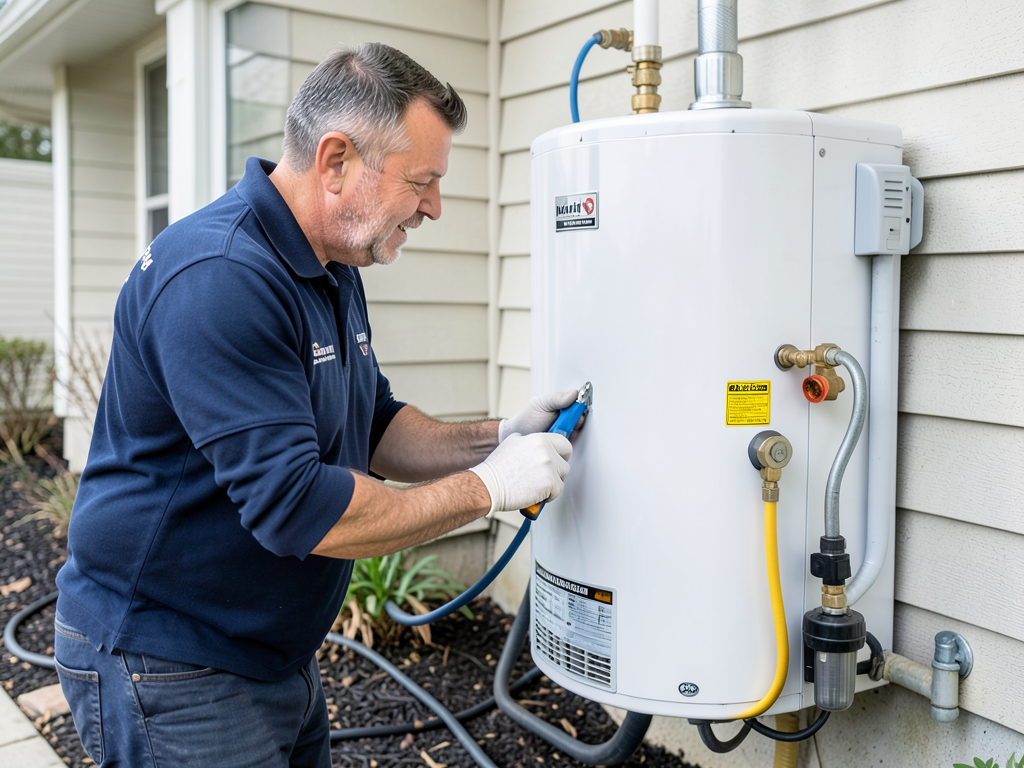
Why your tankless water heater needs a descale every year in Brookfield
Tankless water heaters offer endless hot water and energy savings but they face a unique challenge in Brookfield homes. Milwaukee’s water contains 7-9 grains per gallon of hardness minerals that form scale inside heat exchangers. Without annual descaling this buildup reduces efficiency by up to 30% and can void manufacturer warranties. This guide explains why Milwaukee homeowners need yearly maintenance and what happens when you skip it. The best options for water heater replacement in Wauwatosa.
How Milwaukee’s hard water affects your tankless unit
Lake Michigan water enters Milwaukee’s municipal system containing dissolved calcium and magnesium. These minerals precipitate out as scale when water is heated above 120°F. In tankless units scale forms on the inner walls of the heat exchanger creating an insulating layer that forces the burner to work harder. Reliable Milwaukee sump pump repair services to keep your basement dry.
The scale buildup follows a predictable pattern. First you notice longer wait times for hot water. Then the unit struggles to maintain temperature during simultaneous use. Eventually you hear a popping sound as trapped water flashes to steam beneath mineral deposits. This is your heat exchanger telling you it needs help.. Read more about Why your Muskego water heater is dying early (And how an anode rod saves it).
Milwaukee Water Works tests show our water hardness remains consistently high year-round. Unlike areas with seasonal variations Brookfield homes need annual maintenance regardless of water usage patterns. The constant mineral content means scale accumulates at a steady rate of approximately 1/16 inch per year in untreated units.
5 warning signs your tankless water heater needs descaling
Recognizing these symptoms early can prevent expensive heat exchanger replacement. Watch for these five indicators that your unit needs professional attention. Professional drain cleaning in Shorewood for stubborn kitchen clogs.
- Fluctuating water temperature – Water that alternates between hot and cold during use indicates restricted flow through scaled heat exchanger passages.
- Increased gas or electric bills – Scale forces your unit to burn more fuel to achieve the same temperature rise. A 1/4 inch of scale can increase energy consumption by 18%.
- Error codes on the display – Common codes include LC (lime scale buildup) E5 (inlet thermistor error) and 11 (ignition failure due to restricted flow).
- Reduced hot water volume – You run out of hot water faster than normal when scale reduces the unit’s effective flow rate.
- Unusual noises during operation – Popping cracking or rumbling sounds indicate water trapped beneath mineral deposits flashing to steam.
If you notice any combination of these symptoms your unit needs immediate attention. Continuing to operate a scaled unit risks permanent damage to the heat exchanger and flow sensors.
The professional descaling process explained
Professional descaling involves more than just running vinegar through your unit. The process requires specialized equipment and knowledge of your specific model’s requirements.
First technicians isolate the water heater using service valves. This prevents contamination of your home’s potable water system. They then connect a submersible pump to circulate descaling solution through the heat exchanger at controlled flow rates.
The descaling solution typically contains virgin food-grade citric acid. This chemical dissolves calcium carbonate scale without damaging the copper or stainless steel components. The solution circulates for 45-90 minutes depending on scale severity.
During the process technicians monitor solution temperature and pH levels. Once the solution remains clear for 15 minutes they flush the system with clean water to remove all chemical residue. Finally they test the unit’s flow rate and temperature rise to verify restored performance.
Professional service also includes cleaning the inlet filter inspecting the igniter assembly and checking for gas leaks. These additional steps ensure your unit operates safely and efficiently after descaling.
DIY vs professional descaling: What Brookfield homeowners need to know
Many homeowners consider DIY descaling using white vinegar and a utility pump. While this approach works for light scale it carries significant risks for Milwaukee’s hard water conditions.
White vinegar contains only 5% acetic acid. This concentration may not dissolve heavy scale deposits in Brookfield’s hard water. Virgin citric acid solutions provide 15-20% acid concentration specifically formulated for water heater descaling.
DIY attempts often miss critical steps. Without proper isolation valves you risk contaminating your home’s water supply with descaling chemicals. Incorrect flow rates can damage the heat exchanger or leave scale deposits in hard-to-reach areas.
Professional technicians use digital flow meters to verify your unit returns to factory specifications. They also document the service with photos and performance data which may be required for warranty claims.
The cost difference between DIY and professional service is minimal when you factor in equipment rental chemical costs and your time. Professional descaling in Brookfield typically ranges from $189-289 depending on your unit’s accessibility and the severity of scale buildup.
How often to descale based on your water quality
Milwaukee’s consistent water hardness means most Brookfield homes need annual descaling. However certain factors may require more frequent service.
Homes using well water or those with water softeners still need annual maintenance. Softeners exchange calcium for sodium but don’t eliminate scale formation. The sodium-based scale is actually more difficult to remove than calcium carbonate.
Units serving large families or those with high hot water demand may need biannual descaling. The increased flow rates accelerate scale formation on heat exchanger surfaces.
Commercial applications like salons or restaurants with frequent hot water use often require quarterly descaling. The constant heating cycles create ideal conditions for rapid scale accumulation. Rapid Response Leak Repair.
Units older than five years typically need more frequent service. Microscopic damage to the heat exchanger surface provides additional nucleation sites for scale formation.
Cost analysis: Maintenance vs replacement
Annual descaling costs $189-289 while a new tankless unit costs $2,500-4,000 installed. The math is simple but many homeowners wait until failure to discover the true cost of neglect.
Scale reduces efficiency by forcing your unit to work harder. A 30% efficiency loss on a $40 monthly gas bill adds $144 annually to your utility costs. Over five years this lost efficiency costs more than three professional descaling services.
Heat exchanger replacement due to scale damage averages $800-1,200. This repair often requires replacing multiple components since scale affects sensors and flow control valves. The total repair frequently exceeds the cost of several years of preventive maintenance. EPA.
Manufacturers increasingly require documented annual maintenance for warranty coverage. Without service records they can deny claims for scale-related failures. This means a $300 annual investment protects your $3,000+ unit warranty.
Protecting your investment with scale prevention
While annual descaling is essential you can reduce scale formation between services. Whole-house water softeners exchange calcium and magnesium for sodium but require regular maintenance themselves.
Scale inhibitor systems use polyphosphates to keep minerals suspended in solution. These systems install on the cold water line before your tankless unit and require cartridge replacement every six months.
Point-of-use filters with scale reduction technology can extend service intervals. These filters use template-assisted crystallization to convert scale-forming minerals into harmless crystals that won’t adhere to heat exchanger surfaces.
Regular filter changes on your tankless unit’s inlet screen prevent sediment from combining with scale deposits. This simple step takes five minutes but significantly reduces internal buildup.
Even with prevention systems annual professional inspection remains necessary. No system eliminates scale formation entirely in Brookfield’s hard water conditions.
Why warranty compliance matters
Major manufacturers like Rinnai Navien and Noritz require annual maintenance for warranty coverage. This requirement appears in the warranty documentation that comes with your unit.
Warranty compliance requires more than just descaling. You need documented service records showing specific tests performed and results obtained. Professional services provide detailed reports including flow rates temperature rise and error code history.
Without proper documentation manufacturers can deny claims for scale-related failures. This means a $300 service call could save you from a $2,000+ replacement if your heat exchanger fails.
Some manufacturers require service by licensed plumbers to maintain warranty coverage. This ensures the work meets safety standards and doesn’t void other components’ warranties.
Keep all service records with your warranty documentation. If you sell your home these records prove to buyers that the expensive water heater was properly maintained.
Environmental impact of scale buildup
Scale doesn’t just cost you money it wastes energy and increases your carbon footprint. A scaled unit burns more natural gas or consumes more electricity to deliver the same hot water.
The EPA estimates that scale buildup in water heaters nationwide wastes over 100 million therms of natural gas annually. This translates to approximately 1.1 billion pounds of CO2 emissions.
Milwaukee’s hard water means our tankless units contribute disproportionately to this waste. Annual descaling can reduce your unit’s carbon emissions by 500-800 pounds per year.
Beyond energy waste scale can cause units to fail prematurely. The manufacturing replacement and disposal of water heaters creates significant environmental impact. Preventive maintenance extends unit life reducing this lifecycle environmental cost.
Proper maintenance also prevents chemical contamination. Failed DIY descaling attempts can introduce harmful substances into your home’s water supply. Professional service ensures all chemicals are properly flushed and disposed of according to local regulations.
Finding a qualified Brookfield descaling service
Not all plumbers understand tankless water heater maintenance. Look for technicians with specific training in your unit’s brand and model.
Ask about their descaling process. Qualified technicians use digital flow meters to verify restored performance and provide written reports with before and after measurements.
Verify they carry proper licensing and insurance. Tankless units involve gas lines high voltage electricity and pressurized water systems. Improper service can create serious safety hazards.
Check for manufacturer certifications. Many major brands offer training programs that certify technicians in proper maintenance procedures for their specific equipment.
Read reviews specifically mentioning tankless service. General plumbing reviews don’t indicate expertise with these specialized systems.. Read more about Planning the plumbing for a luxury outdoor shower in Fox Point.
Professional services should offer satisfaction guarantees and warranty their work. This demonstrates confidence in their ability to restore your unit’s performance.
Frequently Asked Questions
How long does professional descaling take?
Most descaling services take 60-90 minutes including isolation flushing and performance testing. Complex cases with severe scale may require additional time.
Can I use vinegar instead of commercial descaling solution?
Vinegar can work for light scale but may not dissolve heavy deposits effectively. Commercial citric acid solutions provide better results and are specifically formulated for water heater components.
Will descaling fix my fluctuating water temperature?
If scale is the cause descaling will restore normal operation. However other issues like faulty flow sensors or gas supply problems may require additional diagnosis.
How do I know if my unit has been properly descaled?
Professional services should provide documentation showing before and after flow rates and temperature rise. Your unit should return to its factory specifications for these measurements.
Does my water softener eliminate the need for descaling?
No. Water softeners exchange calcium for sodium which still forms scale. Units with softeners typically need annual descaling but may experience less severe buildup.
Schedule your Brookfield tankless maintenance today
Don’t wait for your tankless water heater to fail during a cold Brookfield morning. Annual descaling protects your investment improves efficiency and ensures reliable hot water when you need it.
Our technicians understand Milwaukee’s unique water conditions and the specific requirements of your tankless unit. We provide detailed service reports warranty documentation and satisfaction guarantees.
Call (414) 375-7955 today to schedule your professional descaling service. We offer convenient appointment times and emergency service for units showing critical symptoms.
Pick up the phone and call (414) 375-7955 before the next cold snap hits. Your tankless water heater will thank you with years of reliable service and lower utility bills.
Don’t let Milwaukee’s hard water destroy your water heater’s efficiency. Take action now to protect your investment and ensure endless hot water for your Brookfield home. For more information, visit CDC.
{
“@context”: “https://schema.org”,
“@type”: “BlogPosting”,
“headline”: “Why your tankless water heater needs a descale every year in Brookfield”,
“description”: “Milwaukee’s hard water causes scale buildup in tankless water heaters. Learn why annual descaling is essential for efficiency, warranty protection, and preventing costly repairs.”,
“wordCount”: 1958,
“datePublished”: “2026-06-01T15:21:00.000Z”,
“dateModified”: “2026-06-01T15:21:00.000Z”,
“inLanguage”: “en-US”,
“mainEntityOfPage”: {
“@type”: “WebPage”,
“@id”: “https://eliteplumbingmilwaukee.com”
},
“publisher”: {
“@type”: “LocalBusiness”,
“name”: “Elite Plumbing Milwaukee”,
“url”: “https://eliteplumbingmilwaukee.com”
},
“author”: {
“@type”: “Organization”,
“name”: “Elite Plumbing Milwaukee”,
“url”: “https://eliteplumbingmilwaukee.com”
},
“image”: {
“@type”: “ImageObject”,
“url”: “https://eliteplumbingmilwaukee.com/wp-content/uploads/2026/03/why-your-tankless-water-heater-needs-a-descale-eve-1.png”
}
}
{
“@context”: “https://schema.org”,
“@type”: “Plumber”,
“name”: “Elite Plumbing Milwaukee”,
“url”: “https://eliteplumbingmilwaukee.com”,
“address”: {
“@type”: “PostalAddress”,
“addressLocality”: “Milwaukee”
},
“areaServed”: {
“@type”: “City”,
“name”: “Milwaukee”
}
}
{
“@context”: “https://schema.org”,
“@type”: “FAQPage”,
“mainEntity”: [
{
“@type”: “Question”,
“name”: “How long does professional descaling take?”,
“acceptedAnswer”: {
“@type”: “Answer”,
“text”: “Most descaling services take 60-90 minutes including isolation flushing and performance testing. Complex cases with severe scale may require additional time.”
}
},
{
“@type”: “Question”,
“name”: “Can I use vinegar instead of commercial descaling solution?”,
“acceptedAnswer”: {
“@type”: “Answer”,
“text”: “Vinegar can work for light scale but may not dissolve heavy deposits effectively. Commercial citric acid solutions provide better results and are specifically formulated for water heater components.”
}
},
{
“@type”: “Question”,
“name”: “Will descaling fix my fluctuating water temperature?”,
“acceptedAnswer”: {
“@type”: “Answer”,
“text”: “If scale is the cause descaling will restore normal operation. However other issues like faulty flow sensors or gas supply problems may require additional diagnosis.”
}
},
{
“@type”: “Question”,
“name”: “How do I know if my unit has been properly descaled?”,
“acceptedAnswer”: {
“@type”: “Answer”,
“text”: “Professional services should provide documentation showing before and after flow rates and temperature rise. Your unit should return to its factory specifications for these measurements.”
}
},
{
“@type”: “Question”,
“name”: “Does my water softener eliminate the need for descaling?”,
“acceptedAnswer”: {
“@type”: “Answer”,
“text”: “No. Water softeners exchange calcium for sodium which still forms scale. Units with softeners typically need annual descaling but may experience less severe buildup.”
}
}
]
}
{
“@context”: “https://schema.org”,
“@type”: “BreadcrumbList”,
“itemListElement”: [
{
“@type”: “ListItem”,
“position”: 1,
“name”: “Home”,
“item”: “https://eliteplumbingmilwaukee.com”
},
{
“@type”: “ListItem”,
“position”: 2,
“name”: “Blog”,
“item”: “https://eliteplumbingmilwaukee.com/blog”
},
{
“@type”: “ListItem”,
“position”: 3,
“name”: “Why your tankless water heater needs a descale every year in Brookfield”
}
]
}
{
“@context”: “https://schema.org”,
“@type”: “Service”,
“serviceType”: “Plumbing”,
“provider”: {
“@type”: “LocalBusiness”,
“name”: “Elite Plumbing Milwaukee”,
“url”: “https://eliteplumbingmilwaukee.com”
},
“areaServed”: {
“@type”: “City”,
“name”: “Milwaukee”
},
“description”: “Milwaukee’s hard water causes scale buildup in tankless water heaters. Learn why annual descaling is essential for efficiency, warranty protection, and preventing costly repairs.”
}