
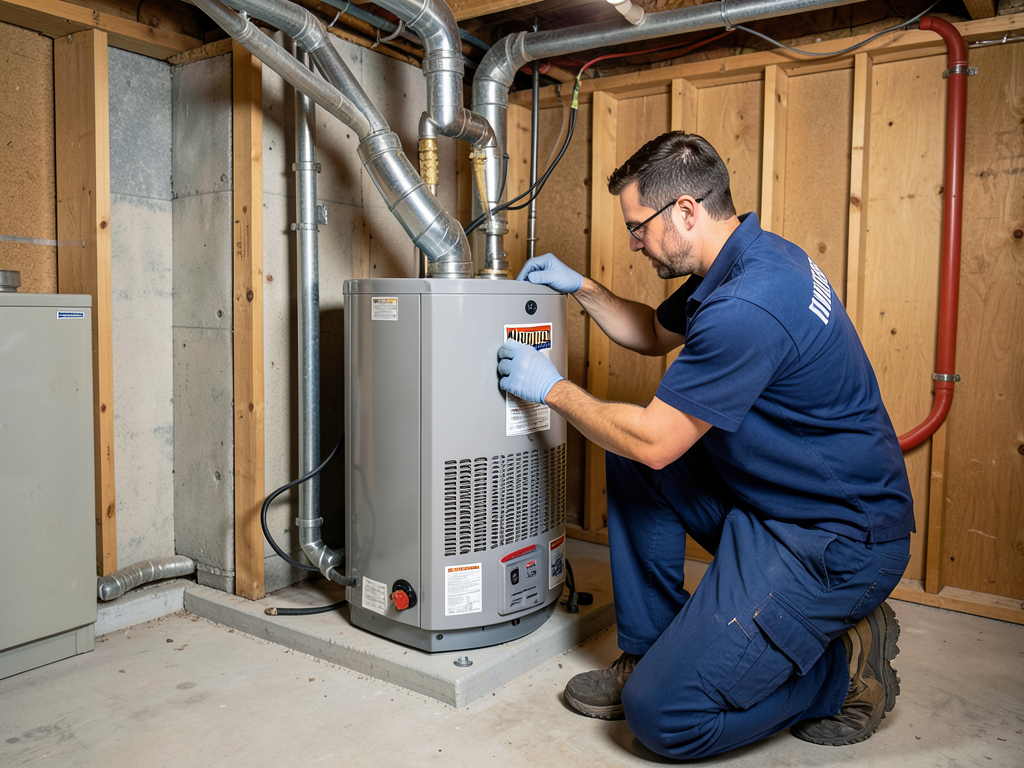
The real pros and cons of heat pump water heaters in the Wisconsin climate
Heat pump water heaters promise major energy savings, but Wisconsin’s cold winters create unique challenges. These hybrid units extract heat from surrounding air to warm your water, which works great in summer but can struggle when basement temperatures drop below 50 degrees. For Milwaukee homeowners, the decision involves more than just energy efficiency—it’s about understanding how these systems perform in our specific climate and whether the Focus on Energy rebates make them worth the investment. Focus on Energy Wisconsin.
How heat pump water heaters actually perform in Milwaukee basements
Milwaukee’s climate creates a distinct performance curve for heat pump water heaters. During summer months, these units excel, pulling free heat from warm basement air and even providing dehumidification—a bonus in our humid Midwest summers. The Coefficient of Performance (COP) typically ranges from 2.0 to 3.0, meaning they produce two to three times more energy than they consume. ENERGY STAR heat pump water heaters.
However, winter performance tells a different story. When basement temperatures fall below 45 degrees, the heat pump must work harder to extract heat from increasingly cold air. Many units automatically switch to electric resistance heating, which eliminates the efficiency advantage. In an unconditioned Milwaukee basement during January, a heat pump water heater might run 70% in electric mode versus just 30% in heat pump mode. Who to call when your Bay View basement floods at 3 AM.
The real-world impact shows up on your utility bill. While summer months might show 60% energy savings compared to a standard electric tank, winter months could see savings drop to just 15-20%. Over a full year in the Milwaukee area, homeowners typically see 35-45% savings, but the performance varies dramatically by season. Reliable Milwaukee sump pump repair services to keep your basement dry.
The Focus on Energy rebate program and federal tax credits
Wisconsin’s Focus on Energy program offers substantial incentives for heat pump water heaters, currently providing up to $500 in rebates for qualifying units. This program, combined with the federal 25C tax credit (30% of the cost up to $2,000), can reduce the installed price by $2,500 to $3,000. The best options for water heater replacement in Wauwatosa.
The rebate structure specifically targets high-efficiency units with Uniform Energy Factor (UEF) ratings of 2.0 or higher. Most Milwaukee homeowners can expect to pay $2,200 to $3,500 out-of-pocket after rebates for a quality 50-gallon unit, compared to $800 to $1,200 for a standard electric model.
However, the rebate program has specific requirements. Units must be installed by a Focus on Energy trade ally contractor, and the home must meet certain energy efficiency standards. Older Milwaukee homes, particularly those in historic districts like Bay View or Riverwest, may need additional insulation or electrical upgrades to qualify.
Top heat pump water heater brands for Milwaukee homes
The Milwaukee market offers several reliable heat pump water heater options, each with distinct advantages for our climate:. Read more about Is hard water making your skin dry and itchy in Waukesha?.
| Brand/Model | UEF Rating | Recovery Rate (GPH) | Noise Level | Best For |
|---|---|---|---|---|
| Rheem ProTerra | 3.45 | 21.0 | 49 dB | Quiet operation in finished basements |
| A.O. Smith Voltex | 3.24 | 21.0 | 51 dB | High efficiency in larger homes |
| Bradford White AeroTherm | 3.15 | 21.0 | 55 dB | Durability in harsh conditions |
| GE GeoSpring | 2.35 | 21.0 | 55 dB | Budget-conscious buyers |
The noise level is a critical factor often overlooked by buyers. At 49-55 decibels, these units produce sound comparable to a window air conditioner. In open-concept Milwaukee homes or finished basements used as living space, this noise can be noticeable during heat pump operation.
Installation requirements and Milwaukee-specific considerations
Installing a heat pump water heater in a Milwaukee home involves several unique considerations. First, these units require adequate air volume—typically 750-1,000 cubic feet of space. Many Milwaukee bungalows and Cape Cods have basements under 800 square feet, which may not provide sufficient air volume for optimal operation.. Read more about Why your water softener salt isn’t going down (and what a salt bridge is).
Second, condensate drainage is mandatory. Heat pump water heaters produce 2-3 gallons of condensate daily, requiring either a floor drain or condensate pump. In older Milwaukee homes without floor drains, this adds $200-400 to the installation cost. Professional drain cleaning in Shorewood for stubborn kitchen clogs.
Electrical requirements also matter. Most heat pump water heaters need a 15-amp, 120-volt circuit for the heat pump and a 30-amp, 240-volt circuit for electric resistance backup. Many Milwaukee homes built before 1980 have 60-amp electrical service, requiring an upgrade to 100 or 200 amps before installation.. Read more about How to properly drain your water heater to remove sediment buildup.
Wisconsin plumbing code requires thermal expansion tanks on all new water heater installations, adding another $150-200 to the cost. The Milwaukee Department of Neighborhood Services (DNS) also mandates permits for water heater replacements, with inspections ensuring proper venting and seismic strapping.
The hidden costs nobody tells you about
Beyond the sticker price, heat pump water heaters carry several ongoing costs specific to our climate. The units’ air filters need cleaning every 3-6 months, and the heat pump’s compressor has a typical lifespan of 8-12 years—shorter than the 10-15 years expected from standard electric tanks.
Milwaukee’s hard water (averaging 12-15 grains per gallon) creates additional challenges. The heat exchanger in heat pump water heaters is more susceptible to mineral buildup than standard tanks. Without a water softener, efficiency can drop 15-20% within three years, and the heat exchanger may fail prematurely.
Maintenance costs also run higher. Annual professional servicing, recommended for optimal performance, costs $150-200 versus $75-100 for standard water heaters. The complexity of these units means more potential failure points—sensors, fans, and electronic controls that can malfunction in our extreme temperature swings.
Is a heat pump water heater right for your Milwaukee home?
The decision depends on several factors specific to your situation. Heat pump water heaters make the most sense for:
- Milwaukee homes with electric water heating (gas users see minimal savings)
- Unfinished basements with adequate air volume
- Households using 40+ gallons daily (families of 3+)
- Long-term homeowners planning to stay 7+ years
- Those prioritizing environmental impact over upfront cost
They’re less suitable for:
- Small Milwaukee bungalows with limited basement space
- Gas-heated homes (minimal ROI)
- Households using less than 30 gallons daily
- Short-term homeowners (less than 5 years)
- Those needing immediate hot water recovery
The recovery rate is a crucial but often overlooked factor. Heat pump water heaters take 2-3 hours to reheat a tank versus 1 hour for standard electric models. For Milwaukee families with teenagers or those who run the dishwasher after everyone showers, this longer recovery time can be problematic.
Comparing heat pump vs. traditional water heaters in Milwaukee
| Feature | Heat Pump Water Heater | Standard Electric | Standard Gas |
|---|---|---|---|
| Annual Energy Cost | $140-180 | $440-520 | $200-250 |
| Installed Cost (After Rebates) | $2,200-3,500 | $800-1,200 | $1,000-1,500 |
| Payback Period | 5-7 years | N/A | N/A |
| Noise Level | 49-55 dB | Silent | Silent |
| Space Required | 750+ cubic feet | 50 gallons | 40-50 gallons |
| Recovery Time | 2-3 hours | 1 hour | 45 minutes |
The environmental impact in Wisconsin
Heat pump water heaters offer significant environmental benefits, but Wisconsin’s electricity mix affects the actual carbon reduction. Our state still generates about 35% of electricity from coal and natural gas, meaning heat pump water heaters produce approximately 1.2 pounds of CO2 per kilowatt-hour.
Even with this carbon-intensive grid, a heat pump water heater in Milwaukee reduces annual CO2 emissions by 1.5 to 2.5 tons compared to a standard electric model. This equals taking a car off the road for about two months or planting 30-50 trees.
The dehumidification benefit also matters in our climate. By removing 2-3 gallons of moisture daily from your basement, these units can reduce or eliminate the need for a separate dehumidifier, saving another 300-400 kilowatt-hours annually.
Common installation mistakes and how to avoid them
Many Milwaukee homeowners make critical errors during heat pump water heater installation that compromise performance:
- Insufficient air volume: Installing in a cramped utility closet instead of an open basement area reduces efficiency by 20-30%
- Poor condensate drainage: Using a small condensate pump that can’t handle continuous operation leads to overflows and water damage
- Incorrect temperature settings: Setting the heat pump mode too low (below 50°F) forces frequent electric resistance operation
- Ignoring water quality: Failing to address hard water issues reduces heat exchanger life by 40-50%
- Improper sizing: Choosing a unit too small for household demand causes constant recovery struggles
The most successful installations involve professional load calculations considering household size, hot water usage patterns, and basement conditions. A family of four using 60+ gallons daily needs at least a 50-gallon unit, while a retired couple using 30 gallons might be fine with a 40-gallon model.
Maintenance requirements for Wisconsin winters
Heat pump water heaters require specific maintenance to handle Wisconsin’s climate extremes:
- Clean or replace air filters every 3 months (more often if you have pets or live near construction)
- Flush the tank annually to remove sediment buildup from hard water
- Check condensate drain lines quarterly for algae growth or blockages
- Test the temperature and pressure relief valve every six months
- Inspect the heat pump’s evaporator coils before each heating season
Milwaukee’s freeze-thaw cycles can cause condensation pipes to freeze in unheated spaces. Insulating these pipes with foam tubing prevents winter failures. Additionally, our humid summers can cause condensate drain lines to grow algae, requiring periodic cleaning with vinegar solution. What to do if your pipes freeze during a Milwaukee cold snap.
Making the final decision
Heat pump water heaters represent a significant investment with complex trade-offs for Milwaukee homeowners. The technology offers substantial energy savings and environmental benefits, but the high upfront cost, space requirements, and climate-specific performance issues mean they’re not ideal for every home.
Before making a decision, consider having a professional energy audit of your home. This $200-300 assessment can identify whether your electrical system needs upgrades, whether your basement provides adequate air volume, and what your actual hot water usage patterns are.
For many Milwaukee homeowners, the combination of Focus on Energy rebates and long-term energy savings makes heat pump water heaters an excellent choice. For others, particularly those in small homes or with gas water heating, traditional models remain the better option.
The key is making an informed decision based on your specific situation rather than being swayed by marketing claims or general efficiency ratings that don’t account for Wisconsin’s unique climate challenges.
Frequently Asked Questions
How long do heat pump water heaters last in Milwaukee?
Heat pump water heaters typically last 10-12 years in Milwaukee’s climate, compared to 12-15 years for standard electric models. The harder working conditions in winter and our hard water can reduce lifespan by 20-30% compared to milder climates.
Can a heat pump water heater replace my dehumidifier?
Yes, heat pump water heaters provide 2-3 gallons of dehumidification daily, which can eliminate the need for a separate dehumidifier in many Milwaukee basements. This provides additional energy savings of 300-400 kilowatt-hours annually.
What size heat pump water heater do I need for my family?
A family of 1-2 people using 30-40 gallons daily needs a 40-gallon unit. Families of 3-4 using 50-70 gallons need a 50-gallon model. Larger households of 5+ using 80+ gallons should consider an 80-gallon unit or multiple smaller units.
Are heat pump water heaters noisy?
Heat pump water heaters produce 49-55 decibels of noise, comparable to a window air conditioner. In open basements or finished spaces, this noise can be noticeable during operation, particularly in quiet homes.
Do I need a permit to install a heat pump water heater in Milwaukee?
Yes, the Milwaukee Department of Neighborhood Services requires permits for all water heater replacements. Professional installers typically handle permitting, but DIY installations must obtain permits and pass inspections for proper venting and seismic strapping.
Ready to make the switch?
Heat pump water heaters offer real benefits for Milwaukee homeowners, but they’re not a one-size-fits-all solution. The combination of Focus on Energy rebates, federal tax credits, and long-term energy savings can make them an excellent investment for the right home.
Before making a decision, schedule a professional assessment of your home’s electrical system, basement conditions, and hot water needs. This evaluation, typically completed in under an hour, can save you thousands in unexpected costs and ensure you choose the right system for your specific situation.
Call (414) 375-7955 today to schedule your heat pump water heater consultation. Our Milwaukee-based team understands the unique challenges of our climate and can help you determine whether this technology makes sense for your home. Don’t wait until your current water heater fails—plan ahead and take advantage of current rebates before they change.
The decision to upgrade your water heating system affects your comfort, utility bills, and environmental impact for the next decade. Make it an informed choice with expert guidance from professionals who understand Milwaukee’s specific needs.
{
“@context”: “https://schema.org”,
“@type”: “BlogPosting”,
“headline”: “The real pros and cons of heat pump water heaters in the Wisconsin climate”,
“description”: “Discover the honest truth about heat pump water heaters in Milwaukee’s climate. Learn about Focus on Energy rebates, cold weather performance, and whether they’re right for your home.”,
“wordCount”: 2115,
“datePublished”: “2026-04-28T13:50:00.000Z”,
“dateModified”: “2026-04-28T13:50:00.000Z”,
“inLanguage”: “en-US”,
“mainEntityOfPage”: {
“@type”: “WebPage”,
“@id”: “https://eliteplumbingmilwaukee.com”
},
“publisher”: {
“@type”: “LocalBusiness”,
“name”: “Elite Plumbing Milwaukee”,
“url”: “https://eliteplumbingmilwaukee.com”
},
“author”: {
“@type”: “Organization”,
“name”: “Elite Plumbing Milwaukee”,
“url”: “https://eliteplumbingmilwaukee.com”
},
“image”: {
“@type”: “ImageObject”,
“url”: “https://eliteplumbingmilwaukee.com/wp-content/uploads/2026/03/the-real-pros-and-cons-of-heat-pump-water-heaters-1.png”
}
}
{
“@context”: “https://schema.org”,
“@type”: “Plumber”,
“name”: “Elite Plumbing Milwaukee”,
“url”: “https://eliteplumbingmilwaukee.com”,
“address”: {
“@type”: “PostalAddress”,
“addressLocality”: “Milwaukee”
},
“areaServed”: {
“@type”: “City”,
“name”: “Milwaukee”
}
}
{
“@context”: “https://schema.org”,
“@type”: “FAQPage”,
“mainEntity”: [
{
“@type”: “Question”,
“name”: “Is a heat pump water heater right for your Milwaukee home?”,
“acceptedAnswer”: {
“@type”: “Answer”,
“text”: “The decision depends on several factors specific to your situation. Heat pump water heaters make the most sense for:”
}
},
{
“@type”: “Question”,
“name”: “How long do heat pump water heaters last in Milwaukee?”,
“acceptedAnswer”: {
“@type”: “Answer”,
“text”: “Heat pump water heaters typically last 10-12 years in Milwaukee’s climate, compared to 12-15 years for standard electric models. The harder working conditions in winter and our hard water can reduce lifespan by 20-30% compared to milder climates.”
}
},
{
“@type”: “Question”,
“name”: “Can a heat pump water heater replace my dehumidifier?”,
“acceptedAnswer”: {
“@type”: “Answer”,
“text”: “Yes, heat pump water heaters provide 2-3 gallons of dehumidification daily, which can eliminate the need for a separate dehumidifier in many Milwaukee basements. This provides additional energy savings of 300-400 kilowatt-hours annually.”
}
},
{
“@type”: “Question”,
“name”: “What size heat pump water heater do I need for my family?”,
“acceptedAnswer”: {
“@type”: “Answer”,
“text”: “A family of 1-2 people using 30-40 gallons daily needs a 40-gallon unit. Families of 3-4 using 50-70 gallons need a 50-gallon model. Larger households of 5+ using 80+ gallons should consider an 80-gallon unit or multiple smaller units.”
}
},
{
“@type”: “Question”,
“name”: “Are heat pump water heaters noisy?”,
“acceptedAnswer”: {
“@type”: “Answer”,
“text”: “Heat pump water heaters produce 49-55 decibels of noise, comparable to a window air conditioner. In open basements or finished spaces, this noise can be noticeable during operation, particularly in quiet homes.”
}
},
{
“@type”: “Question”,
“name”: “Do I need a permit to install a heat pump water heater in Milwaukee?”,
“acceptedAnswer”: {
“@type”: “Answer”,
“text”: “Yes, the Milwaukee Department of Neighborhood Services requires permits for all water heater replacements. Professional installers typically handle permitting, but DIY installations must obtain permits and pass inspections for proper venting and seismic strapping.”
}
},
{
“@type”: “Question”,
“name”: “Ready to make the switch?”,
“acceptedAnswer”: {
“@type”: “Answer”,
“text”: “Heat pump water heaters offer real benefits for Milwaukee homeowners, but they’re not a one-size-fits-all solution. The combination of Focus on Energy rebates, federal tax credits, and long-term energy savings can make them an excellent investment for the right home.”
}
}
]
}
{
“@context”: “https://schema.org”,
“@type”: “HowTo”,
“name”: “Common installation mistakes and how to avoid them”,
“step”: [
{
“@type”: “HowToStep”,
“position”: 1,
“name”: “Insufficient air volume”,
“text”: “: Installing in a cramped utility closet instead of an open basement area reduces efficiency by 20-30%”
},
{
“@type”: “HowToStep”,
“position”: 2,
“name”: “Poor condensate drainage”,
“text”: “: Using a small condensate pump that can’t handle continuous operation leads to overflows and water damage”
},
{
“@type”: “HowToStep”,
“position”: 3,
“name”: “Incorrect temperature settings”,
“text”: “: Setting the heat pump mode too low (below 50°F) forces frequent electric resistance operation”
},
{
“@type”: “HowToStep”,
“position”: 4,
“name”: “Ignoring water quality”,
“text”: “: Failing to address hard water issues reduces heat exchanger life by 40-50%”
},
{
“@type”: “HowToStep”,
“position”: 5,
“name”: “Improper sizing: Choosing a unit too small for hou”,
“text”: “Improper sizing: Choosing a unit too small for household demand causes constant recovery struggles”
}
],
“image”: “https://eliteplumbingmilwaukee.com/wp-content/uploads/2026/03/the-real-pros-and-cons-of-heat-pump-water-heaters-1.png”
}
{
“@context”: “https://schema.org”,
“@type”: “BreadcrumbList”,
“itemListElement”: [
{
“@type”: “ListItem”,
“position”: 1,
“name”: “Home”,
“item”: “https://eliteplumbingmilwaukee.com”
},
{
“@type”: “ListItem”,
“position”: 2,
“name”: “Blog”,
“item”: “https://eliteplumbingmilwaukee.com/blog”
},
{
“@type”: “ListItem”,
“position”: 3,
“name”: “The real pros and cons of heat pump water heaters in the Wisconsin climate”
}
]
}
{
“@context”: “https://schema.org”,
“@type”: “Service”,
“serviceType”: “Plumbing”,
“provider”: {
“@type”: “LocalBusiness”,
“name”: “Elite Plumbing Milwaukee”,
“url”: “https://eliteplumbingmilwaukee.com”
},
“areaServed”: {
“@type”: “City”,
“name”: “Milwaukee”
},
“description”: “Discover the honest truth about heat pump water heaters in Milwaukee’s climate. Learn about Focus on Energy rebates, cold weather performance, and whether they’re right for your home.”
}