



Menu

Commercial Toilet & Urinal Repair in Milwaukee | Zero Downtime, Maximum Capacity

Industrial-grade flushometer repair and commercial flush valve replacement designed to keep your Milwaukee restrooms operational during peak traffic hours without forcing you to close facilities or redirect customers.

Slider Image 1
Slider Image 2
Slider Image 3
Slider Image 4
Slider Image 5
Slider Image 7
Slider Image 8
Slider Image 9
Slider Image 10
Slider Image 11

When Your Commercial Restrooms Fail, Your Business Stops

A malfunctioning toilet or urinal in a commercial facility is not an inconvenience. It is a liability. In Milwaukee's high-traffic office buildings, manufacturing plants, and hospitality venues, restroom downtime means lost productivity, violated occupancy codes, and frustrated employees or customers. The city's older building stock, particularly in the Historic Third Ward and Walker's Point, often houses outdated flush valve systems that fail under constant use. Freezing winters stress supply lines, while hard water from Lake Michigan accelerates mineral buildup in flushometer diaphragms and cartridges.

Commercial urinal maintenance is not residential work scaled up. The pressure demands are different. The flush volumes are higher. The fixture cycling is constant. A restaurant restroom sees 200 flushes per day. An airport terminal sees 2,000. When a flush valve sticks open, you are not just wasting water. You are flooding the space, risking slips, and potentially shutting down entire wings of your facility. When a toilet won't flush, you are forcing occupants to find alternatives, creating bottlenecks, and risking health code violations.

Milwaukee businesses cannot afford to wait three days for a plumber to "fit you in." Industrial toilet repair services require immediate dispatch, proper OEM parts inventory, and technicians who understand commercial-grade pressure regulators and sensor-activated systems. The fix is not about replacing a flapper. It is about restoring capacity without closing your doors.

When Your Commercial Restrooms Fail, Your Business Stops
How We Execute Commercial Restroom Fixture Repair

How We Execute Commercial Restroom Fixture Repair

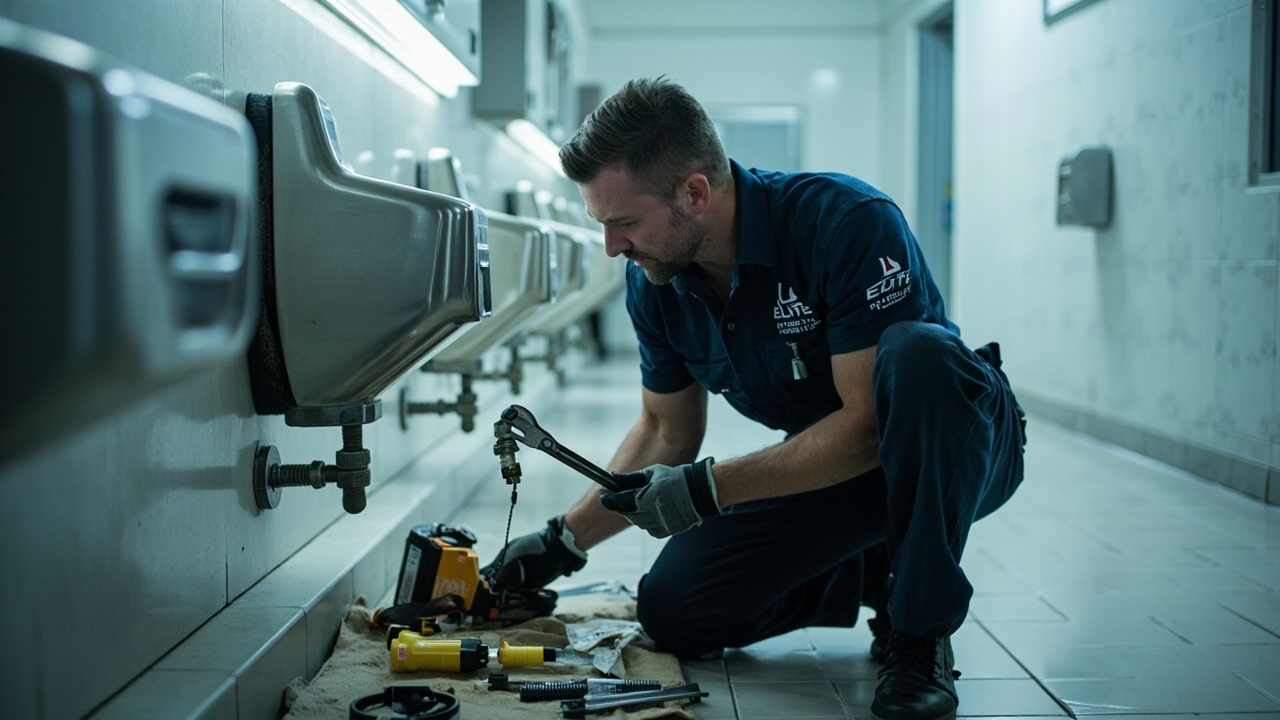
We do not troubleshoot residential fixtures in a commercial context. Our approach to commercial toilet and urinal repair starts with understanding your operational constraints. We ask about peak traffic hours, backup facilities, and whether the affected restroom can be temporarily closed. If it cannot, we stage the repair during low-traffic windows or isolate specific stalls while keeping others functional.

Our diagnostics go beyond the obvious. A toilet that won't flush might have a failed flushometer solenoid, but it could also indicate low supply pressure, a clogged vacuum breaker, or a failing pressure-reducing valve upstream. We test static and dynamic pressure, inspect control stops, and verify backflow prevention devices are not creating restriction. For sensor-activated fixtures, we check battery voltage, IR sensor alignment, and timeout settings that might be causing premature or failed flushes.

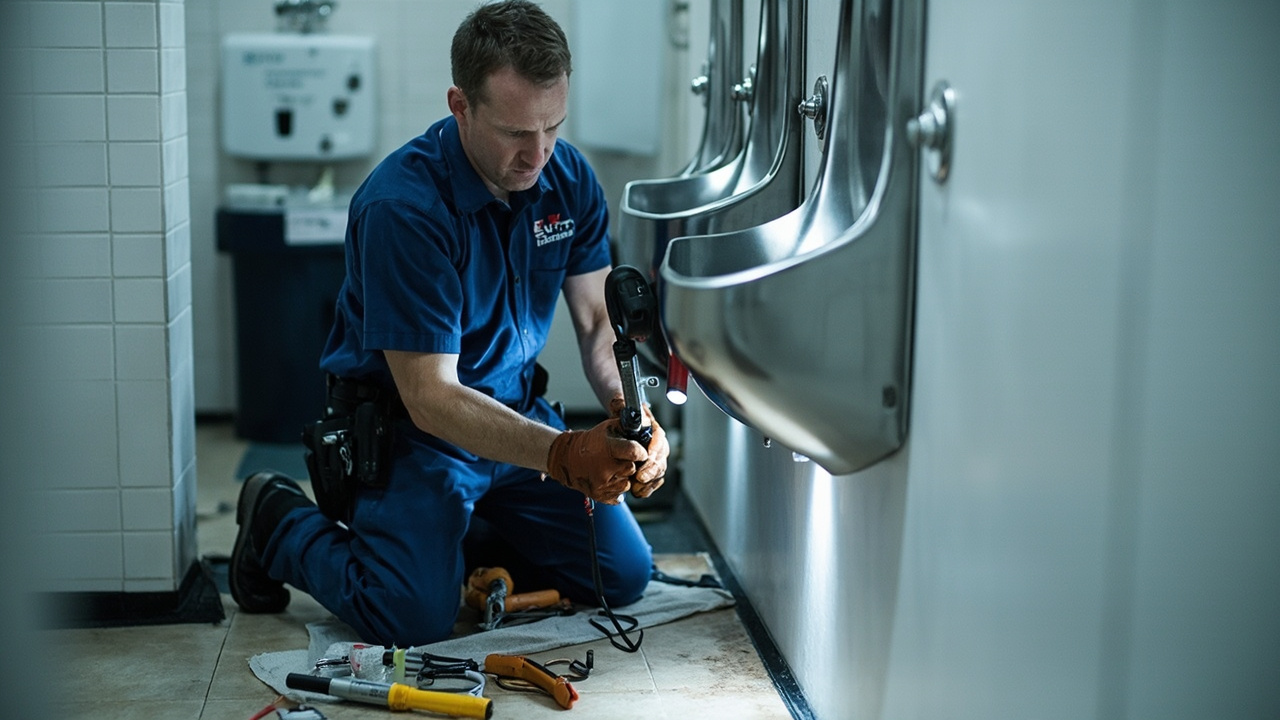
Commercial flush valve replacement is not a universal process. Sloan, Zurn, and Kohler systems use different mounting patterns, diaphragm designs, and rebuild kits. We stock OEM components for all major manufacturers and match the existing fixture trim to avoid costly trim ring replacements. For high-efficiency models, we verify the flush volume meets current code while still clearing waste effectively. Urinal flush valves require different flow rates than toilets, and mixing them creates problems.

We also address root causes. If multiple fixtures are failing simultaneously, the issue is not the fixtures. It is the supply system. We inspect pressure regulators, check for water hammer, and verify no one has installed incompatible mixing valves or recirculation pumps that disrupt pressure balance.

What Happens During Your Service Call

Commercial Toilet & Urinal Repair in Milwaukee | Zero Downtime, Maximum Capacity
01

Facility Assessment and Isolation

We arrive with full commercial parts inventory and identify which restrooms or stalls can remain operational during repair. You do not shut down your entire facility. We isolate the affected fixtures using control stops, verify water is fully shut off, and confirm no pressure remains in the line before disassembly. For multi-stall restrooms, we stage repairs to maintain partial capacity during the work.
02

Diagnosis and Parts Matching

We disassemble the flush valve or flushometer, inspect internal components for wear, mineral buildup, or damage, and identify the exact OEM replacement parts required. We do not force universal kits into proprietary systems. We match diaphragm assemblies, cartridges, and solenoids to your specific fixture model and verify compatibility with your building's water pressure before installation.
03

Testing and Flow Verification

After installation, we test each fixture under full operational pressure, verify the flush cycle completes properly, check for leaks at all connection points, and confirm the fixture resets correctly for the next user. For sensor-activated units, we test detection range and timeout intervals. We leave you with fixtures that perform reliably under your actual traffic conditions, not just during a single test flush.

Why Milwaukee Businesses Choose Elite Plumbing Milwaukee

Commercial plumbing is not a side business for us. We work in Milwaukee's office towers, manufacturing facilities, hospitality properties, and institutional buildings daily. We understand the difference between repairing a fixture and restoring facility capacity. We know that a school cannot close restrooms during class hours, a restaurant cannot afford to lose capacity during lunch rush, and a manufacturer cannot halt production because the shop floor bathroom is down.

Our technicians carry commercial-grade inventory because waiting for parts means extended downtime. We stock Sloan Royal, Regal, and Optima components. We carry Zurn AquaSense and manual flush valves. We have Kohler and American Standard commercial trim kits. When we arrive, we repair the problem that day, not schedule a follow-up visit after ordering parts.

We also understand Milwaukee's building codes and water quality challenges. The city's water hardness ranges from 7 to 10 grains per gallon depending on your location and whether you are on Lake Michigan supply or well water. That mineral content destroys diaphragms and clogs pressure-reducing valves faster than in soft water regions. We factor that into our repair recommendations and suggest preventive maintenance intervals based on your actual water chemistry, not generic schedules.

You also get transparency. We explain what failed, why it failed, and what you can do to extend the life of your fixtures. If your building's pressure is causing premature wear, we tell you. If your maintenance staff is over-tightening control stops and damaging seals, we show them the correct procedure.

What to Expect When You Call Us

Same-Day Response for Facility Emergencies

We dispatch to commercial calls within two hours for fixture failures that threaten facility operations. If you have a stuck-open flush valve flooding a restroom, we do not make you wait until tomorrow. We arrive with the tools and parts to stop the water, assess the damage, and restore function the same day. For non-emergency repairs like slow drains or minor leaks, we schedule service within 24 hours at a time that minimizes disruption to your business operations.

Comprehensive Fixture and System Evaluation

We do not just fix the symptom. During every service call, we inspect the entire fixture assembly, test supply pressure, check backflow devices, and verify control stops are functioning correctly. If we identify upstream issues like pressure irregularities or water quality problems that will cause future failures, we document them and provide recommendations. You get a full picture of your restroom system health, not just a patch on the immediate problem.

Reliable Fixtures Under Real-World Conditions

Our repairs hold up under commercial traffic. We use OEM components rated for high-cycle use, not residential-grade parts that fail under constant operation. We test fixtures under full pressure before we leave and verify they perform correctly through multiple flush cycles. You do not get callbacks three days later because the repair failed. You get fixtures that operate reliably through your actual daily traffic volume.

Preventive Maintenance Recommendations

Commercial fixtures require scheduled maintenance to prevent catastrophic failures during peak hours. We provide maintenance schedules based on your fixture usage, water quality, and building age. For facilities with high traffic, we recommend annual flushometer rebuilds and pressure regulator testing. We also offer maintenance agreements for multi-location businesses that want consistent service across all Milwaukee properties without managing individual service calls for each building.

Frequently Asked Questions

You Have Questions,
We Have Answers

How to fix a commercial toilet that won't flush all the way? +

A commercial toilet that fails to flush completely usually suffers from low water pressure, a faulty flush valve, or mineral buildup restricting flow. Milwaukee's hard water accelerates calcium deposits inside flush valves and jets. Check the flush valve diaphragm for wear or debris. Inspect rim jets for blockages using a wire or descaling solution. Verify the water supply line delivers adequate pressure. Adjust the flush valve if your system allows calibration. For high-traffic facilities, schedule preventive maintenance quarterly to avoid downtime. Incomplete flushes create hygiene liabilities and violate commercial building codes in Milwaukee.

What is the most common toilet flush problem? +

The most common commercial toilet flush problem is a worn or damaged flapper. Flappers deteriorate from chlorine, hard water minerals, and constant use. Milwaukee's mineral-heavy water shortens flapper lifespan significantly. A degraded flapper allows water to leak from the tank into the bowl, triggering phantom flushes and wasting thousands of gallons monthly. This drives up utility costs and strains septic or municipal systems. Inspect flappers every six months in commercial settings. Replace immediately if you notice warping, mineral crust, or loss of flexibility. Proper flapper maintenance prevents costly water waste and ensures code compliance.

How do you adjust the valve on a commercial toilet? +

Adjusting a commercial flush valve requires accessing the valve body and modifying the flush volume or duration settings. Most commercial toilets use flushometer valves, not tank-style mechanisms. Locate the adjustment screw on the valve body. Turn clockwise to reduce flush volume or counterclockwise to increase it. Milwaukee's plumbing code mandates low-flow compliance, typically 1.6 gallons per flush maximum. Never exceed manufacturer specifications or local ordinances. Incorrect adjustments cause incomplete waste removal or water waste. For businesses without maintenance staff, hire a licensed plumber to calibrate valves properly and document compliance for inspections.

How much does it cost for a plumber to repair a toilet flange? +

Toilet flange repair costs vary based on damage severity, access difficulty, and material type. Expect to pay between $150 and $450 for labor and materials in Milwaukee. Simple wax ring replacements cost less. Broken cast iron or PVC flanges requiring concrete removal or subfloor repair increase costs significantly. Commercial settings often involve difficult access under tile or within slab foundations. Milwaukee's freeze-thaw cycles can crack flanges in unheated spaces. Budget for higher costs if asbestos tile or lead piping complicates the job. Get written estimates detailing scope, materials, and code compliance before authorizing work.

How does a commercial toilet flush valve work? +

A commercial flush valve uses water pressure, not gravity, to flush waste. When you press the handle, a diaphragm inside the valve lifts, releasing pressurized water from the supply line directly into the bowl. The sudden high-volume flow creates siphoning action, clearing waste efficiently. After 2-4 seconds, the diaphragm closes, stopping water flow. Milwaukee's municipal water pressure typically ranges from 50-80 PSI, sufficient for most flushometer valves. These systems require no storage tank, making them ideal for high-traffic facilities. Regular diaphragm replacement prevents leaks and maintains consistent flush performance in commercial environments.

How do I know if my fill valve or flapper is bad? +

A failing fill valve runs continuously or refills slowly. Listen for hissing sounds indicating constant water flow. Check if the tank takes longer than 60 seconds to refill after flushing. A bad flapper causes phantom flushes or visible ripples in the bowl between uses. Add food coloring to the tank. If color appears in the bowl within 15 minutes without flushing, the flapper leaks. Milwaukee's hard water degrades both components faster than soft water areas. In commercial settings, replace fill valves every 3-5 years and flappers annually to prevent water waste and maintain efficiency.

How to fix a toilet that won't flush but isn't clogged? +

A toilet that will not flush but shows no clog typically has a faulty flapper, disconnected lift chain, or broken flush handle mechanism. Inspect the tank components. Verify the flapper seals properly against the flush valve seat. Check if the lift chain has slack or disconnected from the handle arm. Examine the handle linkage for cracks or corrosion. Milwaukee's mineral-heavy water corrodes metal components faster. In commercial toilets with flushometer valves, the diaphragm may need replacement. These mechanical failures stop water release without creating blockages. Replace worn components immediately to restore functionality and avoid occupant complaints.

Will hydrogen peroxide dissolve toilet paper? +

Hydrogen peroxide will not effectively dissolve toilet paper. It breaks down organic stains and kills bacteria but lacks the chemical structure to disintegrate cellulose fibers in paper products. Commercial facilities should never rely on household remedies for drainage issues. Excessive toilet paper typically clears with a plunger or closet auger. Milwaukee businesses must maintain proper waste disposal protocols to prevent backups. Educate staff to avoid flushing paper towels or sanitary products. For persistent blockages, schedule professional hydro-jetting or video inspection to identify line obstructions. Chemical solutions risk pipe damage and violate environmental regulations in Milwaukee County.

Can a flapper be adjusted instead of replaced? +

Most flappers cannot be adjusted, only replaced. However, you can adjust the lift chain length to improve closure. Ensure 1/2 inch slack when the handle is at rest. Too much slack prevents full opening. Too little prevents complete sealing, causing leaks. Some adjustable flappers feature dials controlling flush duration, but these are rare in commercial settings. Milwaukee's hard water mineral buildup on flapper surfaces prevents proper sealing regardless of chain adjustment. In high-use commercial facilities, replace flappers every 12-18 months rather than attempting adjustments. Replacement costs less than water waste from improperly sealed valves.

Why put aluminum foil in a toilet tank? +

Placing aluminum foil in a toilet tank is a baseless internet myth with no plumbing benefit. Foil does not prevent mineral buildup, improve flush performance, or reduce water consumption. In commercial settings, foreign objects in tanks risk damaging flush valves, clogging fill valves, or violating health codes. Milwaukee health inspectors can cite facilities for unsanitary tank conditions. Proper maintenance involves scheduled inspections, component replacement, and descaling treatments for hard water buildup. Trust proven methods and professional service instead of unverified household tricks. Maintain commercial toilets with manufacturer-approved parts and procedures to ensure reliability and code compliance.

How Milwaukee's Hard Water Accelerates Commercial Flush Valve Failure

Milwaukee's Lake Michigan water supply contains calcium and magnesium concentrations that create mineral scale inside flushometer diaphragms and valve seats. In commercial fixtures that cycle 100 to 500 times per day, this buildup causes diaphragms to stick, control stops to seize, and vacuum breakers to fail within 18 to 24 months instead of the typical three to five year lifespan. Older buildings in Brewers Hill and Bay View with original galvanized supply lines compound the problem by introducing rust particles that damage seals and clog pressure regulators. Regular flushometer maintenance is not optional in Milwaukee. It is mandatory for preventing mid-day failures that shut down your restrooms.

Elite Plumbing Milwaukee works exclusively in this region and stocks parts specific to the fixture brands and models common in Milwaukee's commercial building stock. We know which buildings still run 1980s Sloan Royal valves and which properties upgraded to sensor-activated Optima systems. We understand local plumbing code requirements for backflow prevention and fixture spacing. When you call a Milwaukee-based commercial plumbing contractor, you get technicians who have repaired fixtures in buildings identical to yours and understand the maintenance challenges unique to this water supply and climate.
Plumbing Services in The Milwaukee Area

View our service area on the map to see how we can serve you. We proudly provide top-tier plumbing services throughout the Milwaukee region and its surrounding communities. Our dedicated team is just a call or click away, ready to deliver the reliable solutions you need, right to your doorstep. We are committed to being your trusted local plumbing experts for any and all jobs.

Address:
Elite Plumbing Milwaukee, 2201 N Doctor M.L.K. Jr Dr, Milwaukee, WI, 53212

Additional Services We Offer

Our news updates

Latest Articles & News from The Blogs

Why Your Enderis Park Shower Gets Cold When the Toilet Flushes That sudden blast of cold water when someone flushes…

Why your Enderis Park home has fluctuating water temperatures when you flush the toilet

Why Your Enderis Park Shower Gets Cold When the Toilet Flushes That sudden blast of cold water when someone flushes…

Deciding between a battery or water-powered backup sump pump for your Mequon basement

The Spring Thaw Threat: Why Mequon Basements Need Backup Protection Mequon homeowners know the drill. When Lake Michigan ice melts…

How to protect your pool house pipes from the first freeze in River Hills

How to protect your pool house pipes from the first freeze in River Hills Milwaukee’s first hard freeze typically hits…

Contact Us

Call Elite Plumbing Milwaukee at (414) 375-7955 for immediate dispatch to commercial toilet and urinal failures. We arrive with parts, not excuses. Your facility does not wait, and neither do we.